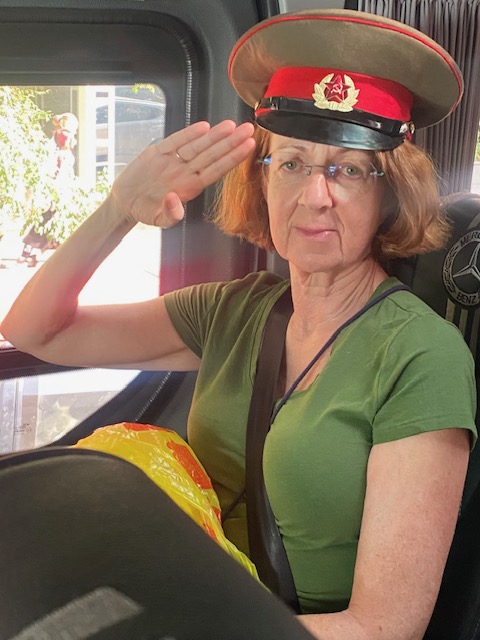
In Kazakhstan I was very aware of being in a former Soviet country. For a start there’s a large display of Soviet tanks in one of the parks in Almaty, with a stall selling military memorabilia – and of course, I couldn’t resist a hat.
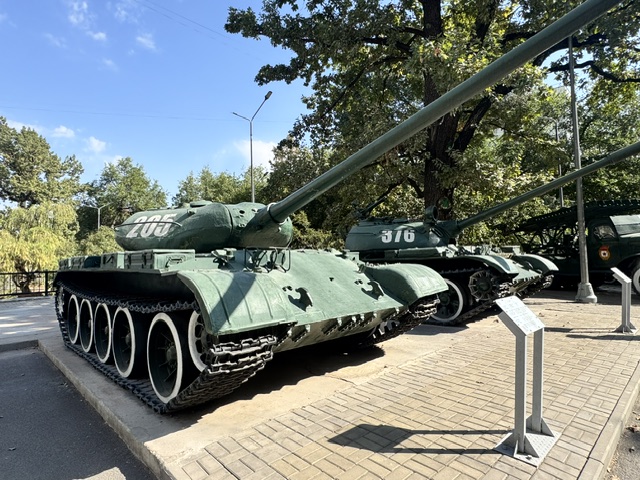
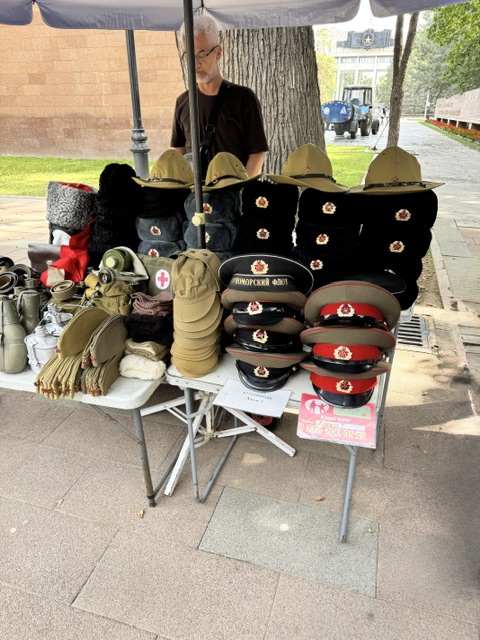
The country has a very different feel to Uzbekistan, which feels like an Islamic country and I couldn’t detect any traces there of its former Soviet history. And also, unlike Uzbekistan or Kyrgyzstan, I didn’t see a single person in Kazakhstan wearing traditional dress; everyone looked very Western.
Whilst Uzbekistan’s main attraction is the architecture of the great cities along the Silk Road, Kazakhstan is more outdoorsy, offering magnificent landscapes and natural wonders.
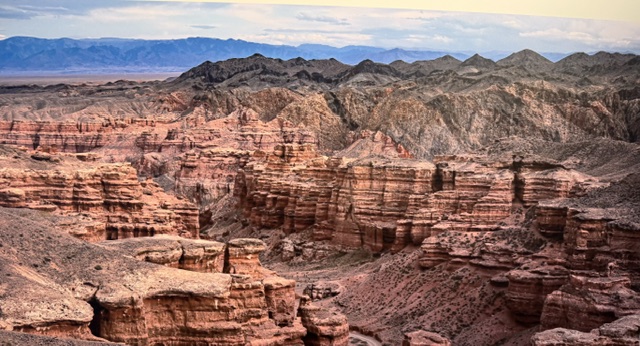
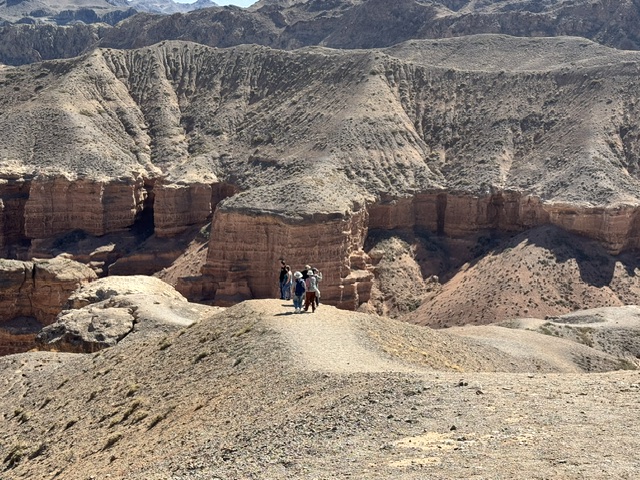
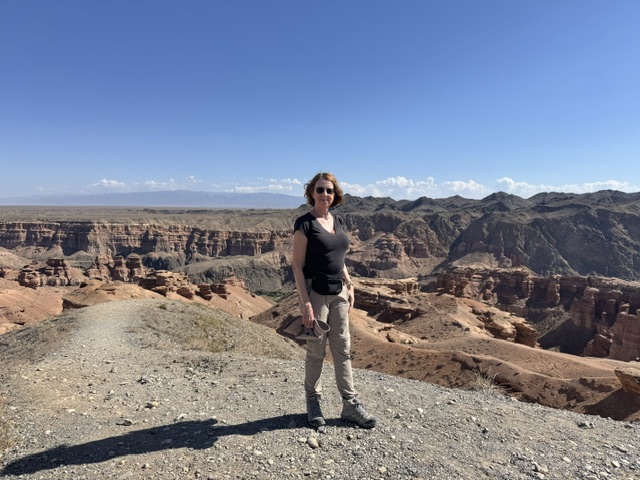
I’ve never been to the Grand Canyon, but Charyn Canyon is billed as its little sister, and it’s massive, so her American big sister must be ginormous. Charyn is a red sandstone gorge with eroded rock spires and cliffs up to three hundred metres tall. It’s absolutely magnificent and very difficult to get a photo to do it justice.
But it was the petroglyphs at the UNESCO site, Tamgaly Tas, that really blew me away. To be honest, I wasn’t too sure exactly what a petroglyph was before this trip. But I soon learnt that it’s a design carved, scratched or scraped into a rock face. It’s not chipped or hammered, so the design is smooth – and it’s also incredibly long-lasting.
The petroglyphs we saw date back to the Bronze Age (Fourteenth to Thirteenth Centuries BCE) and were made by tribes from Iran who were the ancestors of modern Europeans. And you could see clearly from the pictures that human nature hasn’t changed much in the last three and a half thousand years.
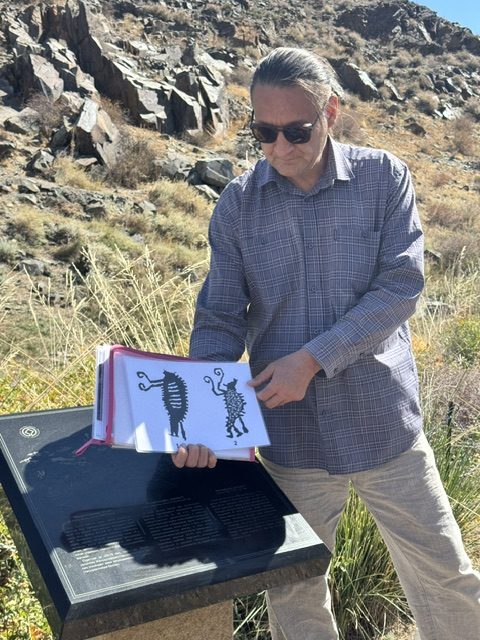
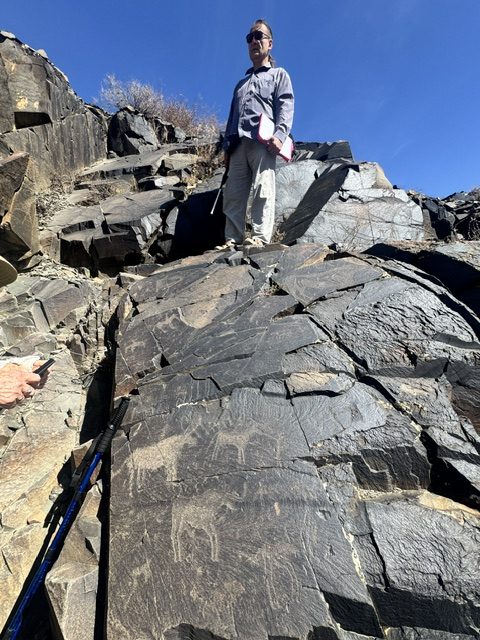
Priests ran the site and were the only ones allowed to create pictures. They created the pictures by scratching with bronze sticks and then polishing the image and it would take three days to make one. They drew demons stealing, warriors dancing, and conflict between good and evil. There are gods at the top of the world, and people at the bottom. People help the gods and then the gods help the people: the circle of life. Goats and bulls are sacrificed – a goat first as a sort of appetiser, followed by a bull – and energy from the animals goes up to the gods and then comes down to the people.
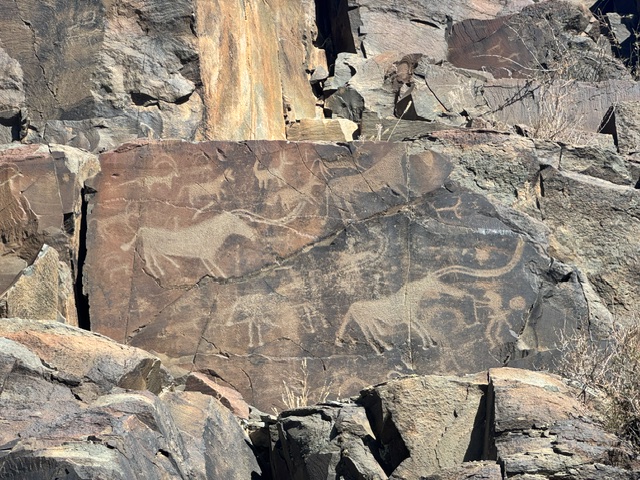
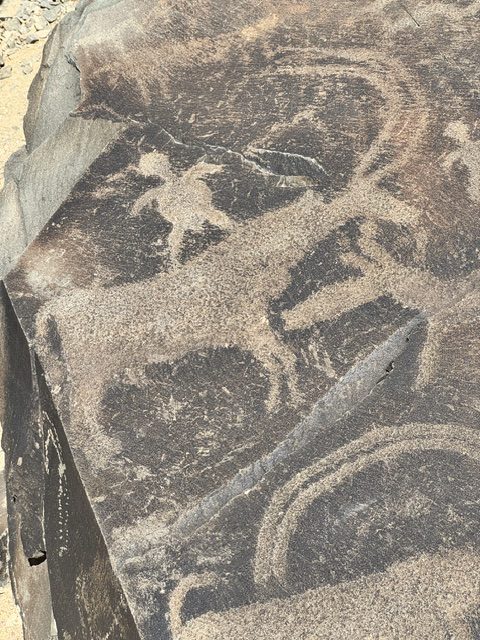
One thing I couldn’t understand was that we were told the gods could take the form of a bull, and yet bulls were sacrificed. So this seems like a belief system that is fraught with danger. I wondered how they knew that the bull they were killing was just a common or garden bull and wasn’t a god in disguise, because that would be an unfortunate mistake to make.
It may be because all the bulls were sacrificed and so there weren’t any left to eat, that the Kazakhs developed a taste for horse meat. It’s very common and extremely popular.
We went to the market in Almaty and there were several horse meat stalls. One was offering free tastings of horse sausage, so I took a piece. The sausage had huge pieces of fat in it, which didn’t look very appetising, but the lean horse meat was delicious.
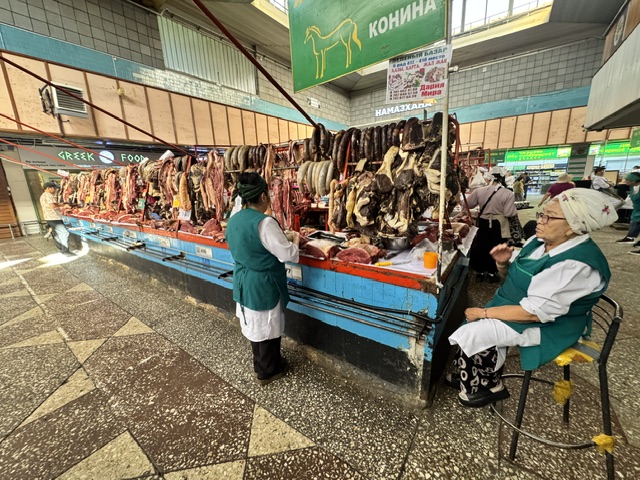
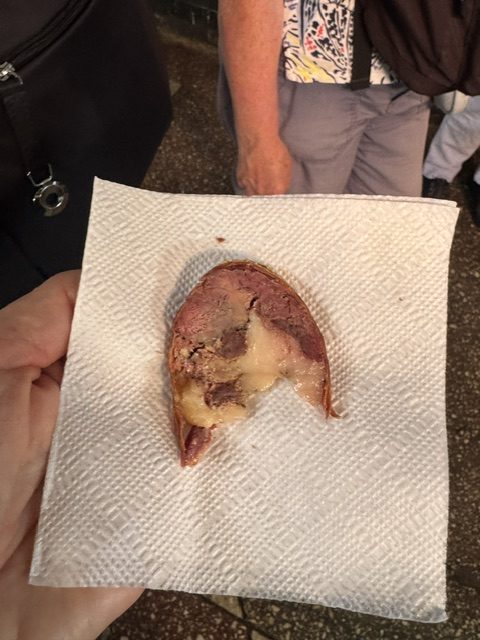
Some members of our group shuddered, but I’m sure we’ve all eaten horse meat in the past, disguised in a lasagne or a chilli, and I’d much rather eat it knowing what it is, than when it’s being passed off as something else.
But when I went online to learn more about Kazakh horse meat specialities, I found out that one of their local delicacies, karta, is a horse rectum sausage. So I’m very much hoping that wasn’t the sausage I was given and that I enjoyed so much.