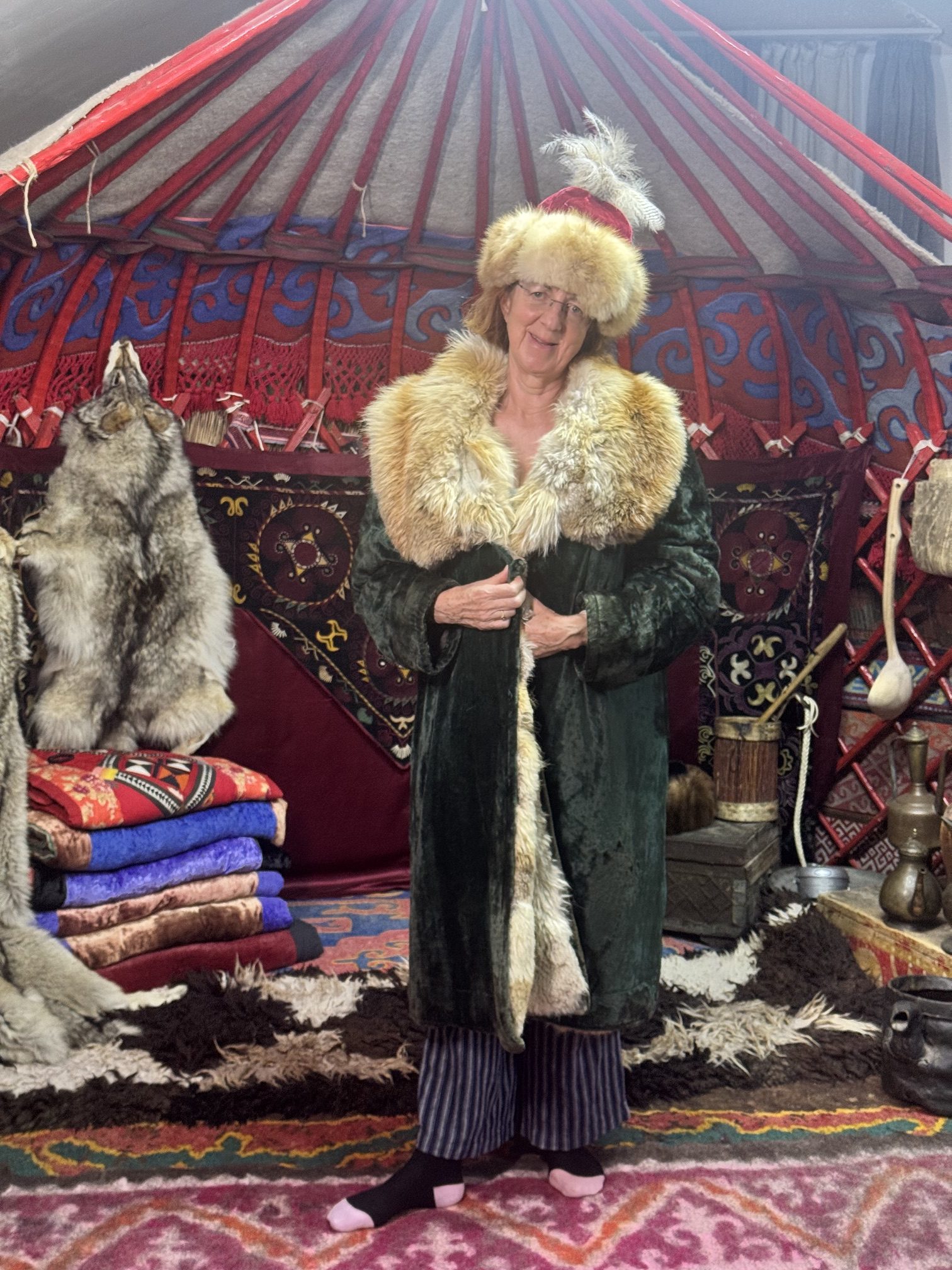
I didn’t know much about Kyrgyzstan before my trip, but even so I wasn’t expecting to learn that, until 2016, it was perfectly legal to steal a woman off the streets and force her to marry you. And even after it was made illegal, the practice still continued for several years. It wasn’t until the families of the young women involved started going to the police, and the bride-stealing men started going to prison, that it stopped.
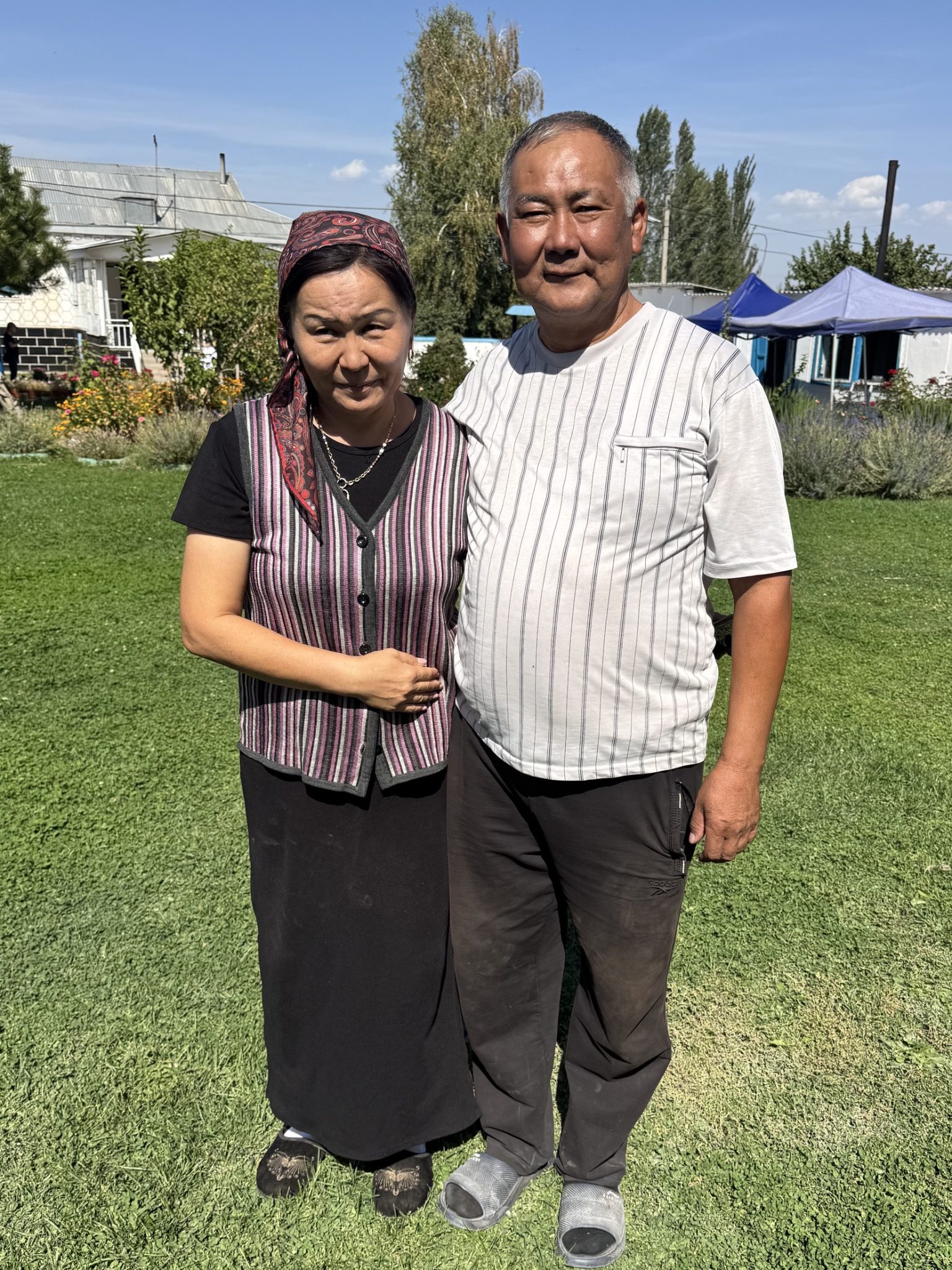
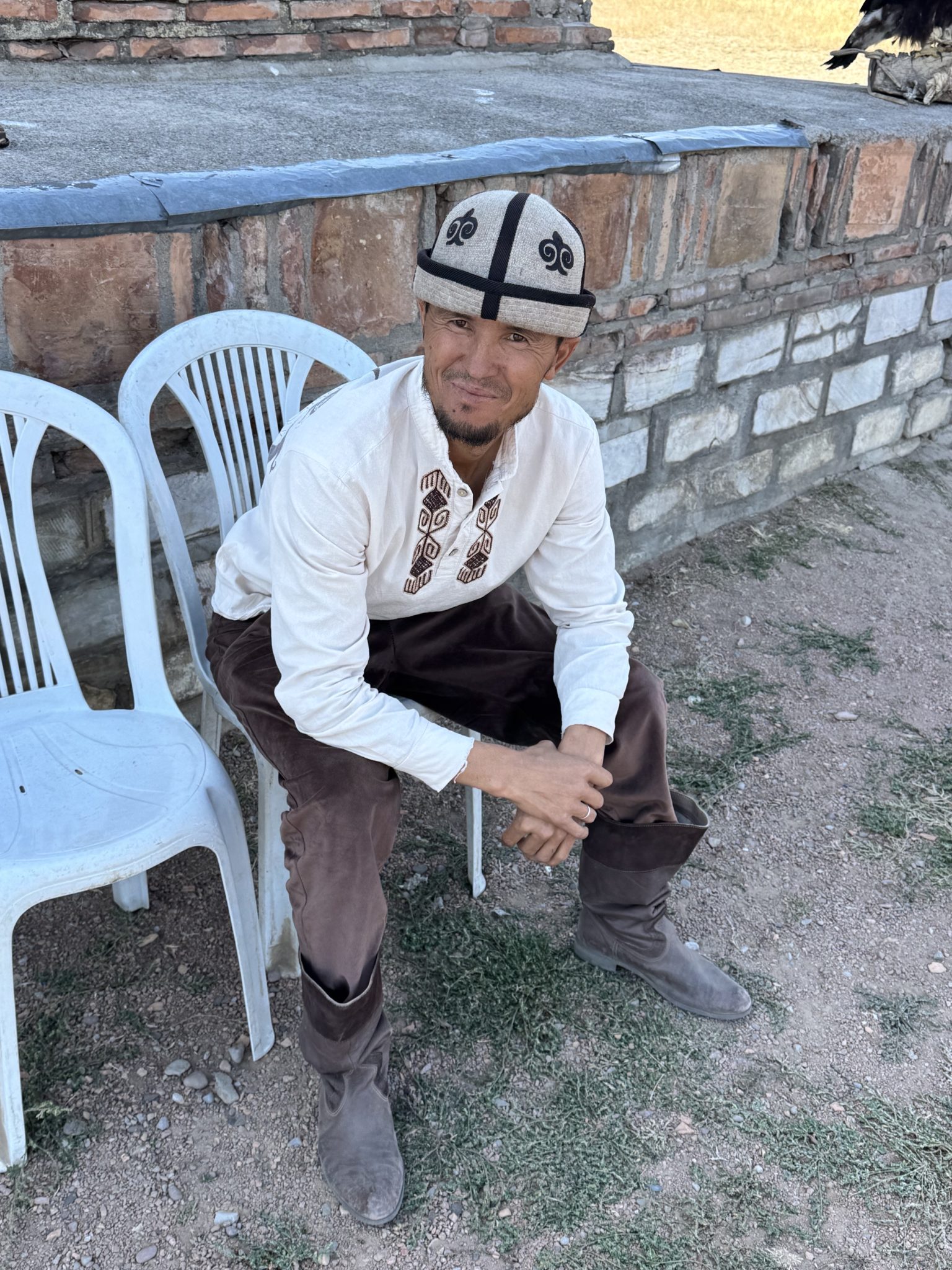
This man, Turat, stole this woman and married her 26 years ago. He was quite open about it and said that of all the boys in his high school class, only one courted a woman traditionally and then asked her family for permission to marry her – all the others simply stole a woman. And Turat was so shy that he didn’t even steal her himself – he got some friends to do it for him!
The reasons for bride stealing varied, according to our guide. Some men wanted to avoid paying for a wedding, others were too shy to meet any women, some were afraid the girl’s parents would reject them as a suitor, and some simply couldn’t afford the bride price – a dowry often adding up to thousands of pounds.
Once the woman had been abducted and spent a night at the man’s house, she was considered to be ruined and her family wouldn’t take her back, so she had no option but to stay with the man.
Our Kyrgyz guide and her friends were shown a film at school about bride stealing when they were teenagers, which warned them of the danger they faced, and they made a pact never to go out anywhere alone and always to travel in a group.
Turat’s wife seems to have made peace with the situation and they now have three grown-up sons who will not be stealing their wives when the time comes for them to marry.
Another tradition in Kyrgyzstan – and this one hasn’t been outlawed – is eagle hunting. There are still around a hundred and fifty eagle hunters plying their trade and we saw one taking his two eagles out for a day’s hunting. Each eagle weighs five to seven kilos, which is quite a weight to carry on your arm all day. They prefer to use female eagles which are up to a third larger than the males and considered to be more aggressive, so they are able to capture much larger prey. A female golden eagle is able to lift a fully grown wolf into the air.
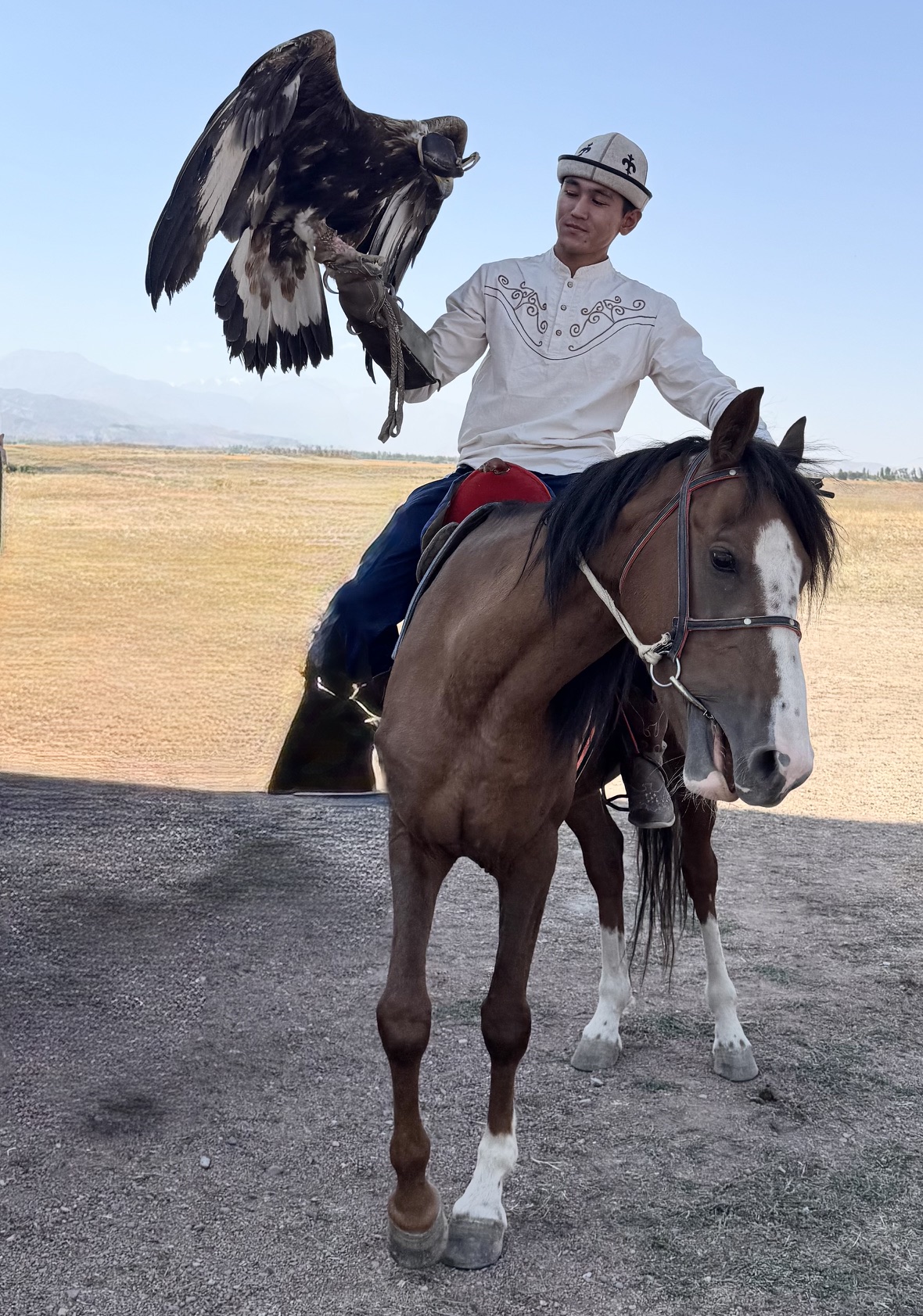
Eagles are very intelligent and even the four-month-old male knew his name and turned his head when he was called. The eagle hunter was explaining that eagles are preferable to weapons when it comes to hunting because an eagle immobilises its prey by grabbing it by the mouth so it can’t bite. This means that the pelt remains intact and fetches a better price than if the wolf, fox or rabbit skin is pierced by an arrow or a bullet.
Yurts are hugely important in Kyrgyz culture. Whilst the people are no longer nomadic – the USSR forced them all to settle – they still make yurts. They are used as holiday homes, sold to tourists, or donated to charity. For example, the Kyrgyz government pledged two hundred yurts to Turkey for the victims of the 2023 earthquake and the village we visited, which makes eighty per cent of all the yurts in Kyrgyzstan, recruited every man, woman and child to fulfill this order and they completed them all in twenty days!
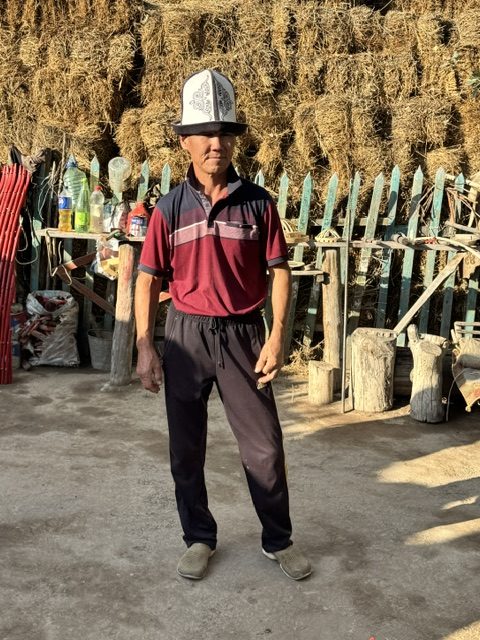
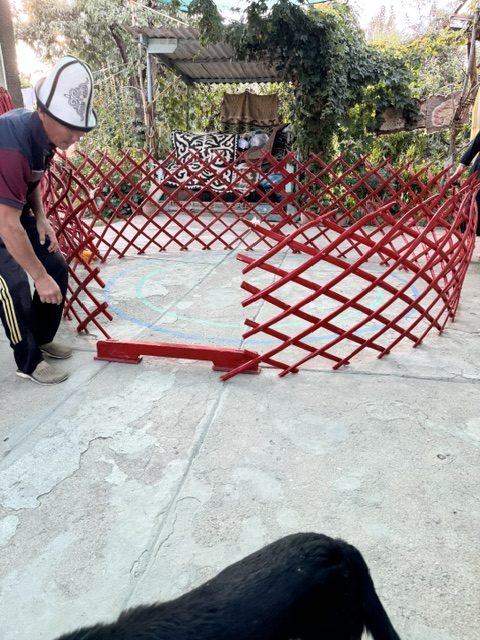
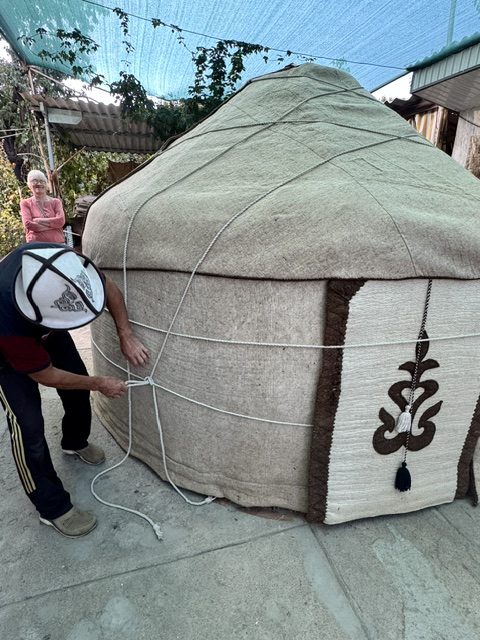
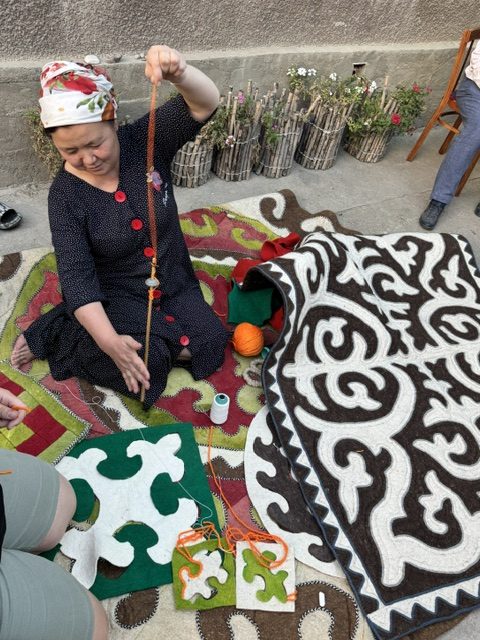
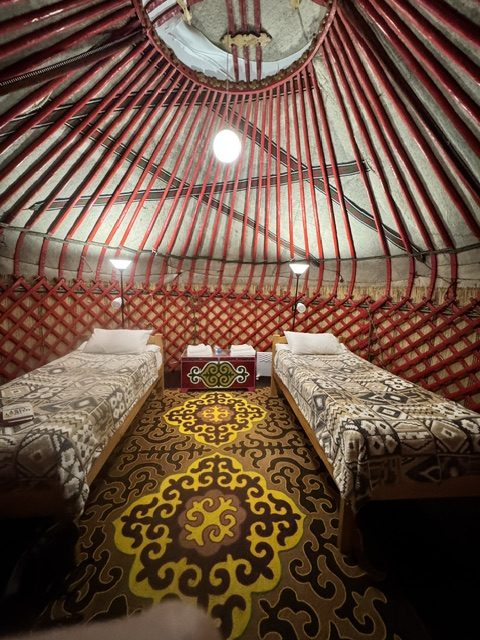
The frame of the yurt is made of willow, which is flexible, and it opens out like an accordion, meaning it’s quick and easy to put up and take down. The sticks are joined with strips of cow skin and then painted red to protect them from insects. The felted wool covering weighs half a tonne and can last for up to fifty years. It’s totally waterproof because of all the lanolin in the wool.
After a demonstration by Raslan, we had a go at assembling a yurt, and just about managed it between the twelve of us. Although quite a few of our knots were retied by the expert as we put the frame together, we did end up with something that looked passably yurt-like – and I was confident enough that it wouldn’t collapse to go and sit inside it.
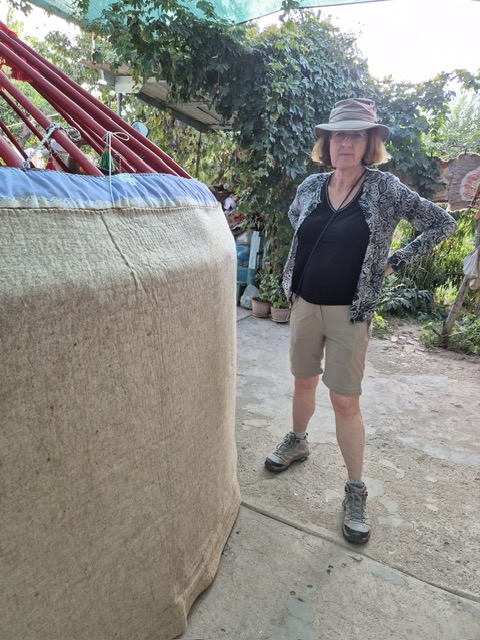
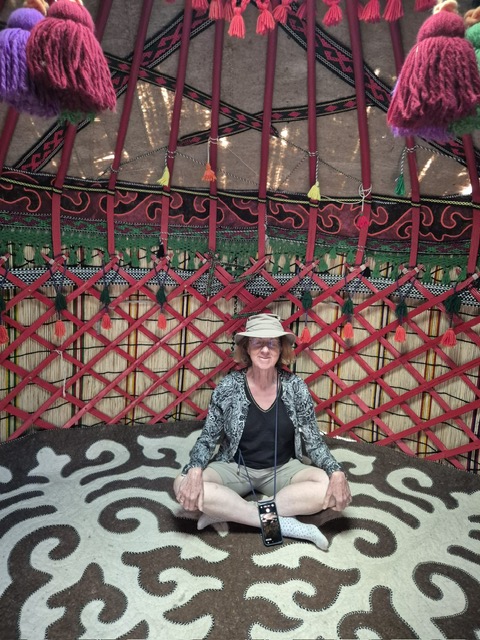
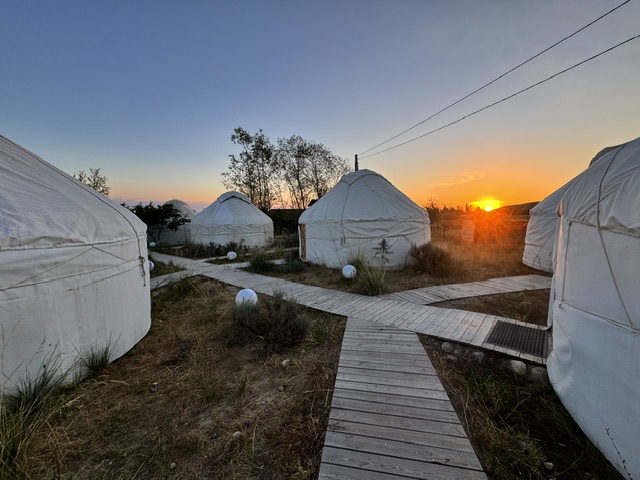
After this, the only thing left to tick off for the total yurt experience was a night in a yurt out in the wilderness. We arrived after dark, and were warned not to leave the yurt camp unless we wanted to be eaten by jackals. My yurt was right by the perimeter fence, which was only about a metre and a half high, and I could hear the jackals howling in the darkness. I’m pretty sure any self-respecting jackal could have scaled that fence in five seconds, so I had to hope that the lights and the campfire would scare them off.
On the plus side, the yurt was very comfortable, with two beds, electric lights and a heater, but on the minus side, a yurt is a sacred place so no bathrooms are allowed and you have to walk to the washroom block for the loos and the showers … listening to the howling the other side of the fence as you go.
Needless to say, I survived and in the morning the yurt camp looked beautiful in the sunrise – and there wasn’t a jackal to be heard.
Hemingway explained it much better than me: I know the night is not the same as the day: that all things are different, that the things of the night cannot be explained in the day, because they do not then exist.
I think I can cope with jackals that only exist at night, but I think I would cope better by having an en-suite bathroom.