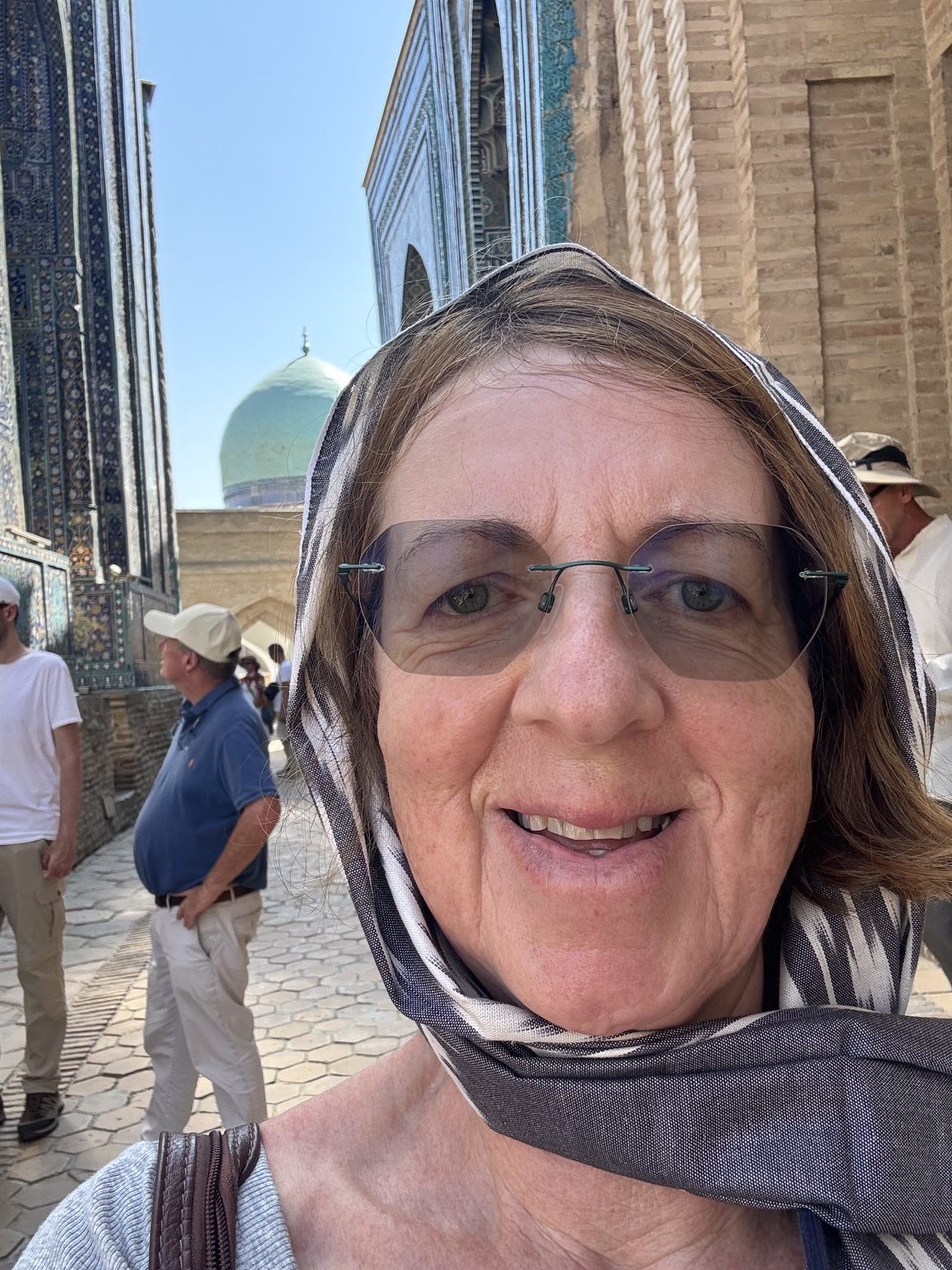
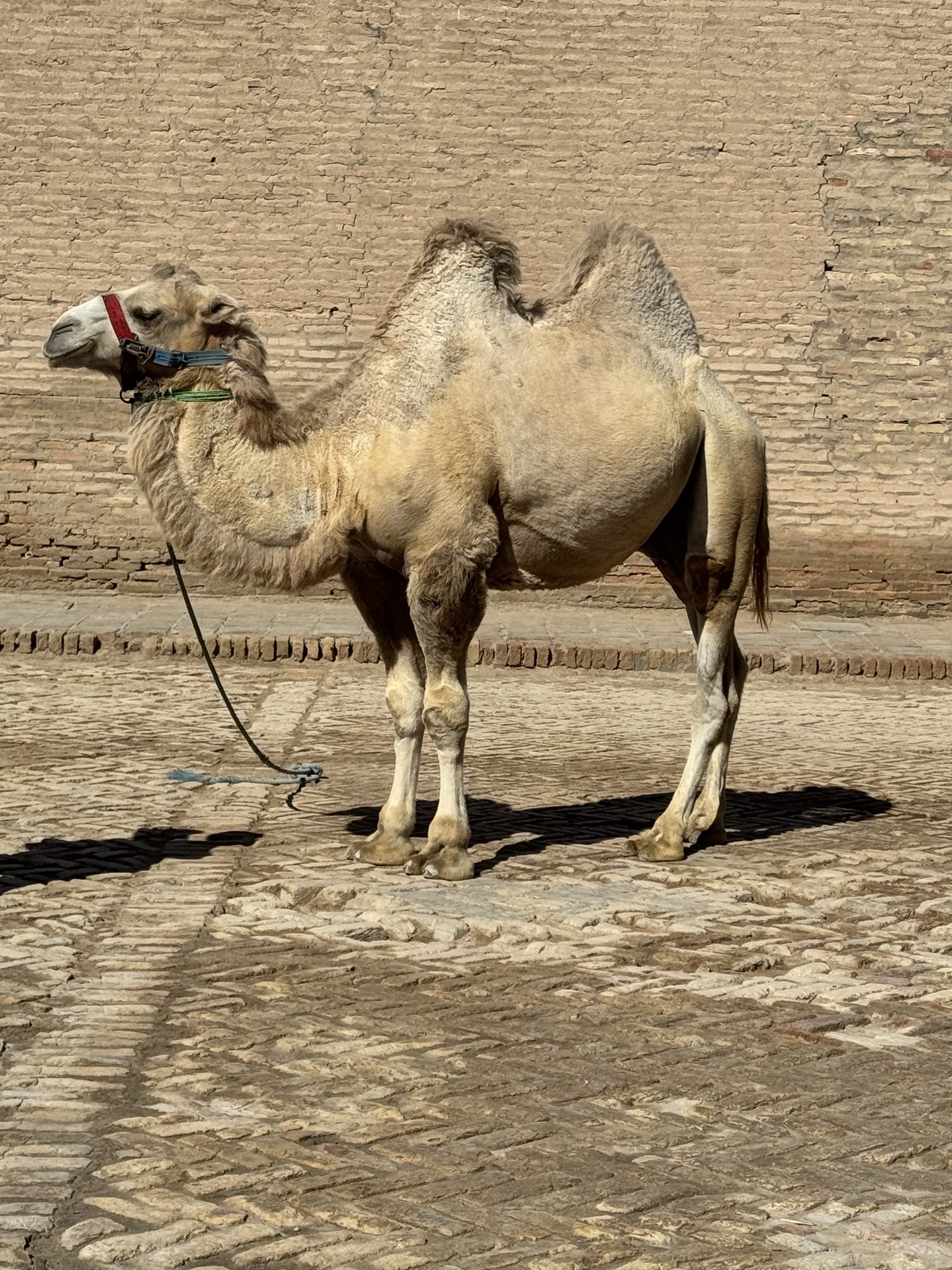
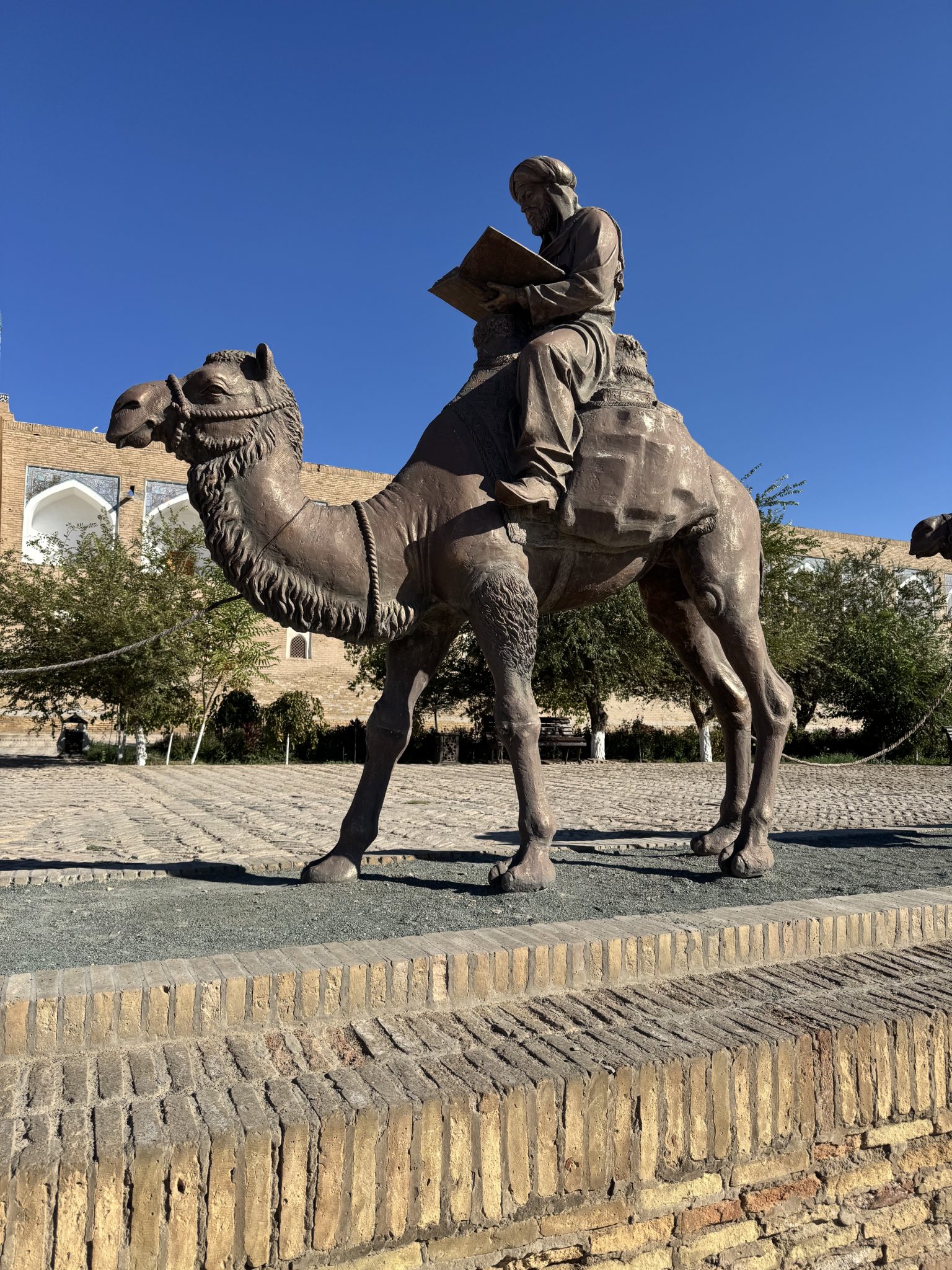
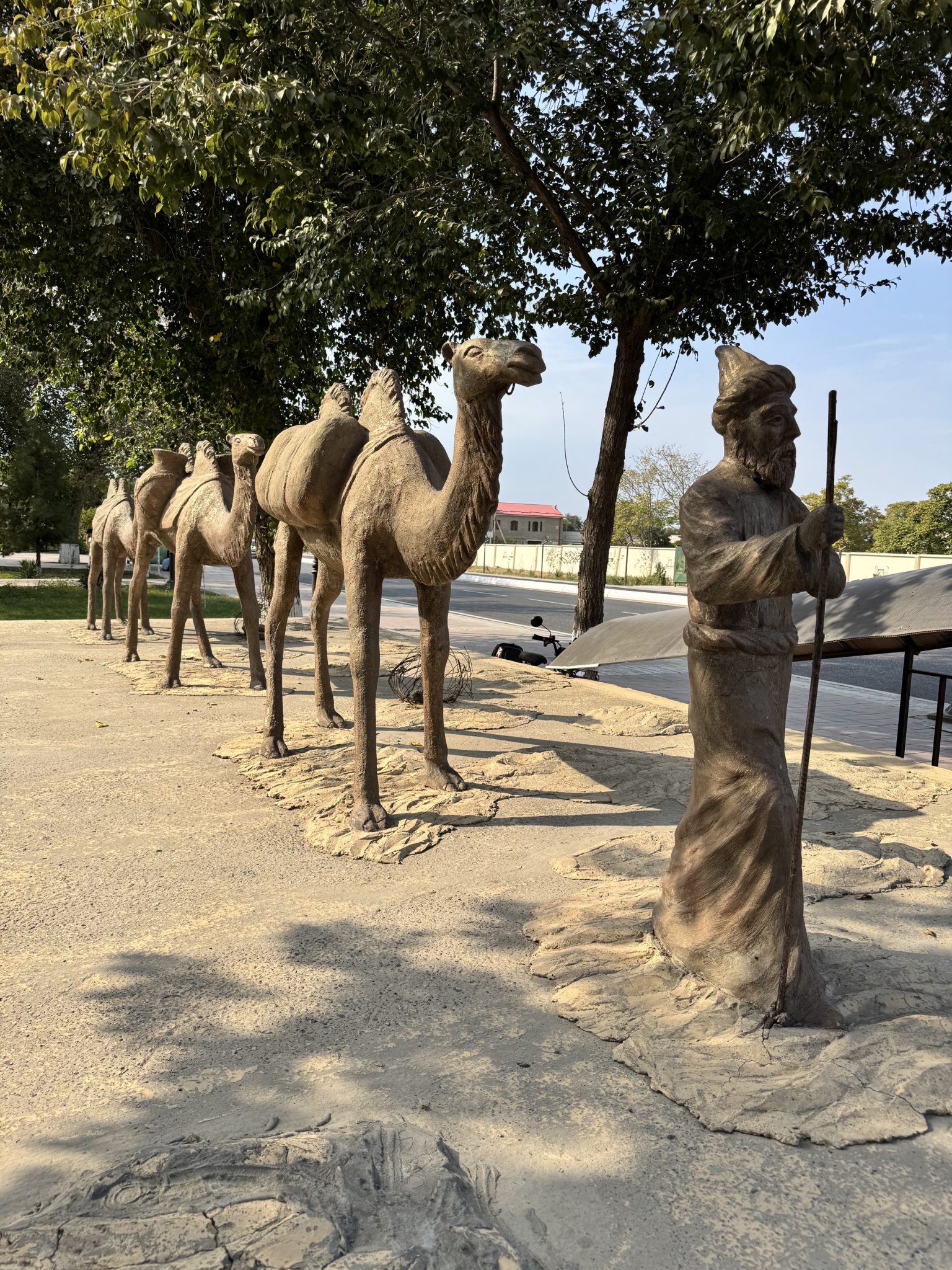
Uzbekistan was once at the heart of the Silk Road. Caravans of camels would cross the country carrying silks, spices, gold and other exotics to trade. The Silk Road connected China with India, Iran and the Roman Empire through Central Asia, and went right across the middle of Uzbekistan, putting cities like Samarkand, Bukhara and Khiva on the map.
And transport is still something that the Uzbekis are very proud of – although it’s slightly more modern now. The high speed trains that link the major cities and whizz people through the desert are almost as good as the Shinkansen in Japan. When you arrive at the station there are porters who take your luggage from the bus and load it onto the train. And all you have to do as a passenger is breeze along the platform to be met by your carriage steward who shows you to your seat. A trolley comes through and everyone is given a complimentary breakfast/lunch, and other stewards pass though the carriage carrying trays with fresh fruit juice, bowls of strawberries, dishes of yogurt if you want to buy some extras.
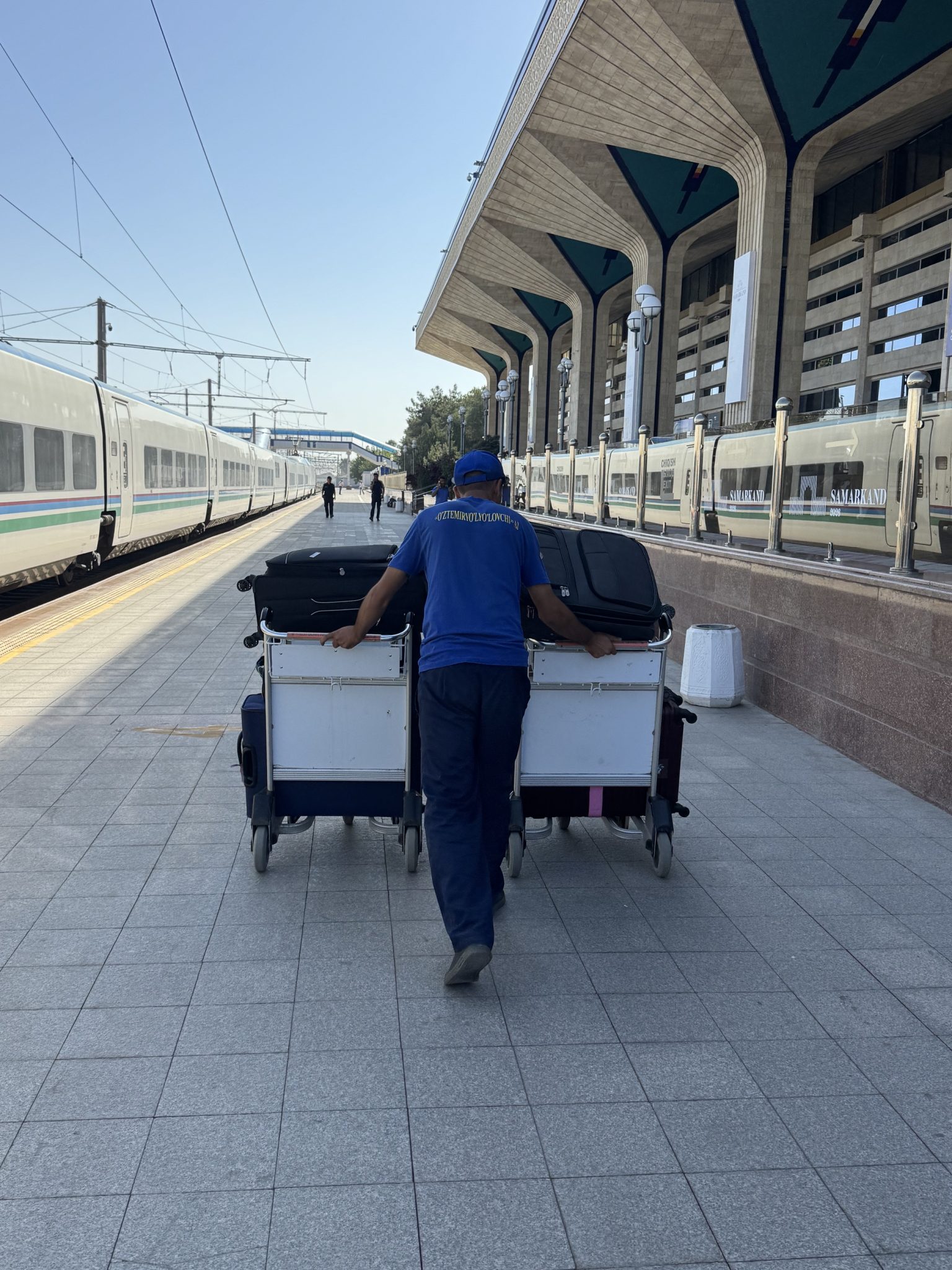
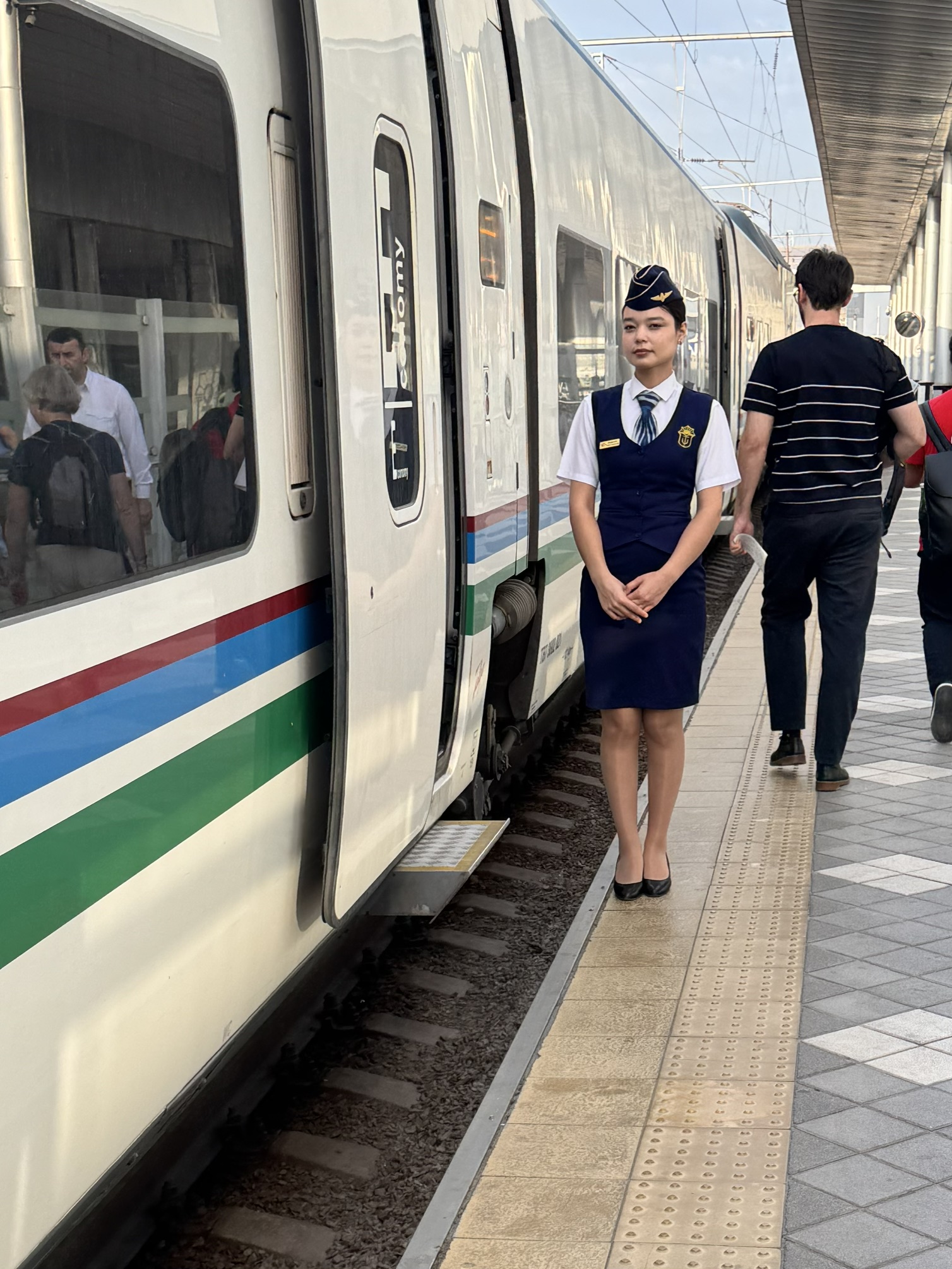
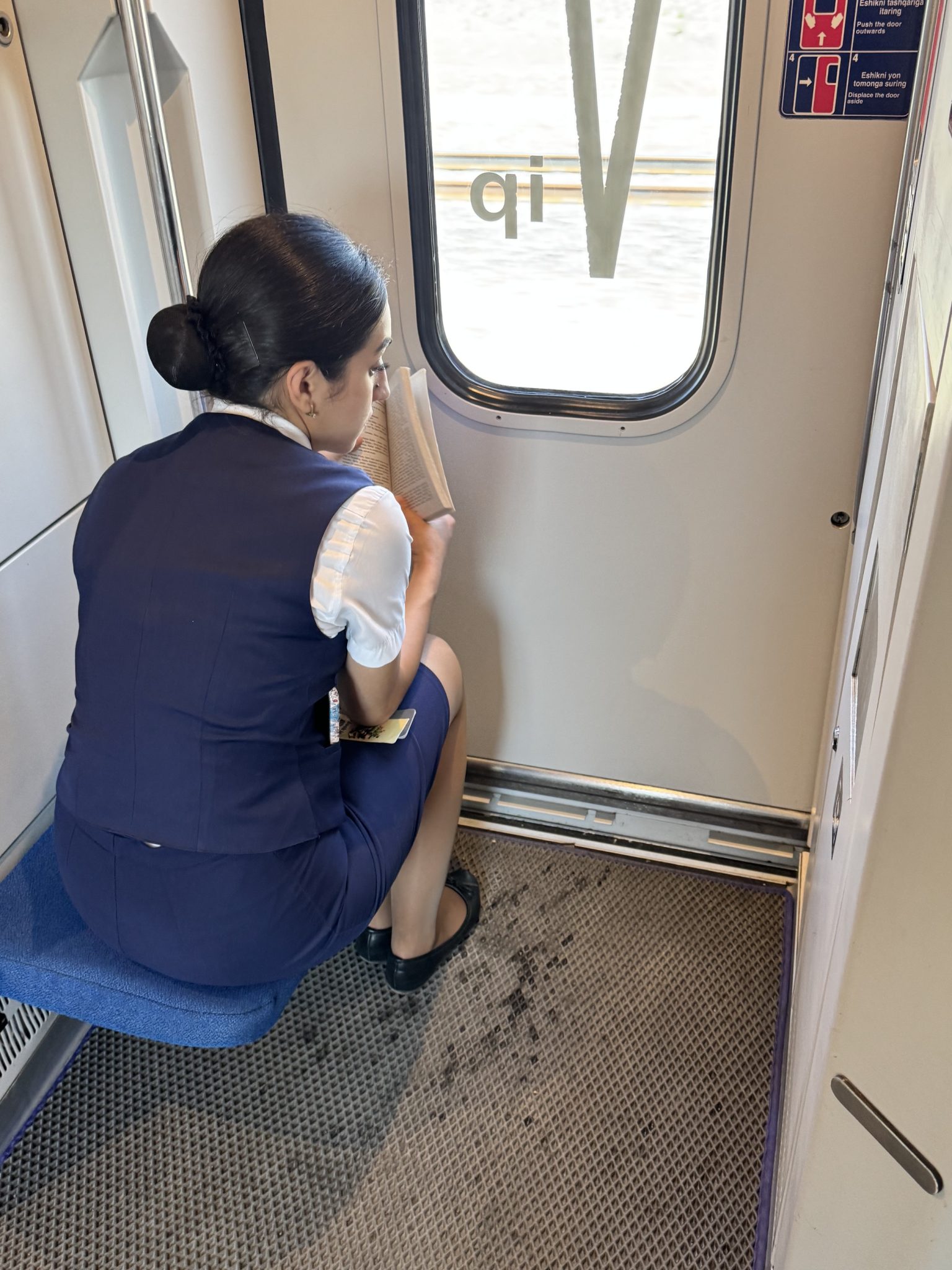
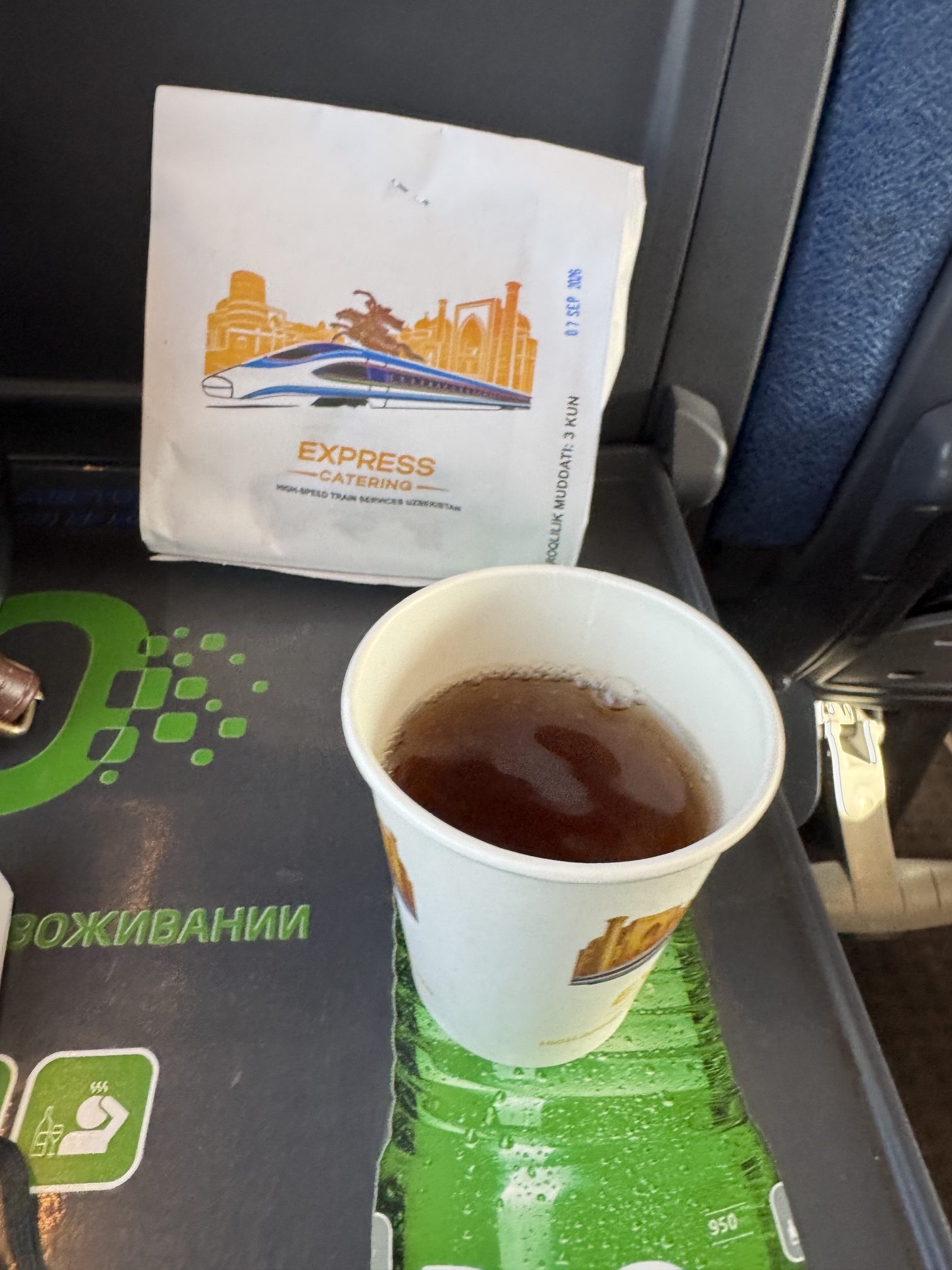
Michael Portillo travelled on the trains from Tashkent to Samarkand and then on to Bukhara, but the train to Khiva is so new that it wasn’t finished when he made his programmes. The trip from Bukhara to Khiva used to take seven hours on a bus – travelling on a straight road through the desert with nothing to see – and now it’s just three hours on the train. There’s still nothing to see, but at least you spend less time looking at it.
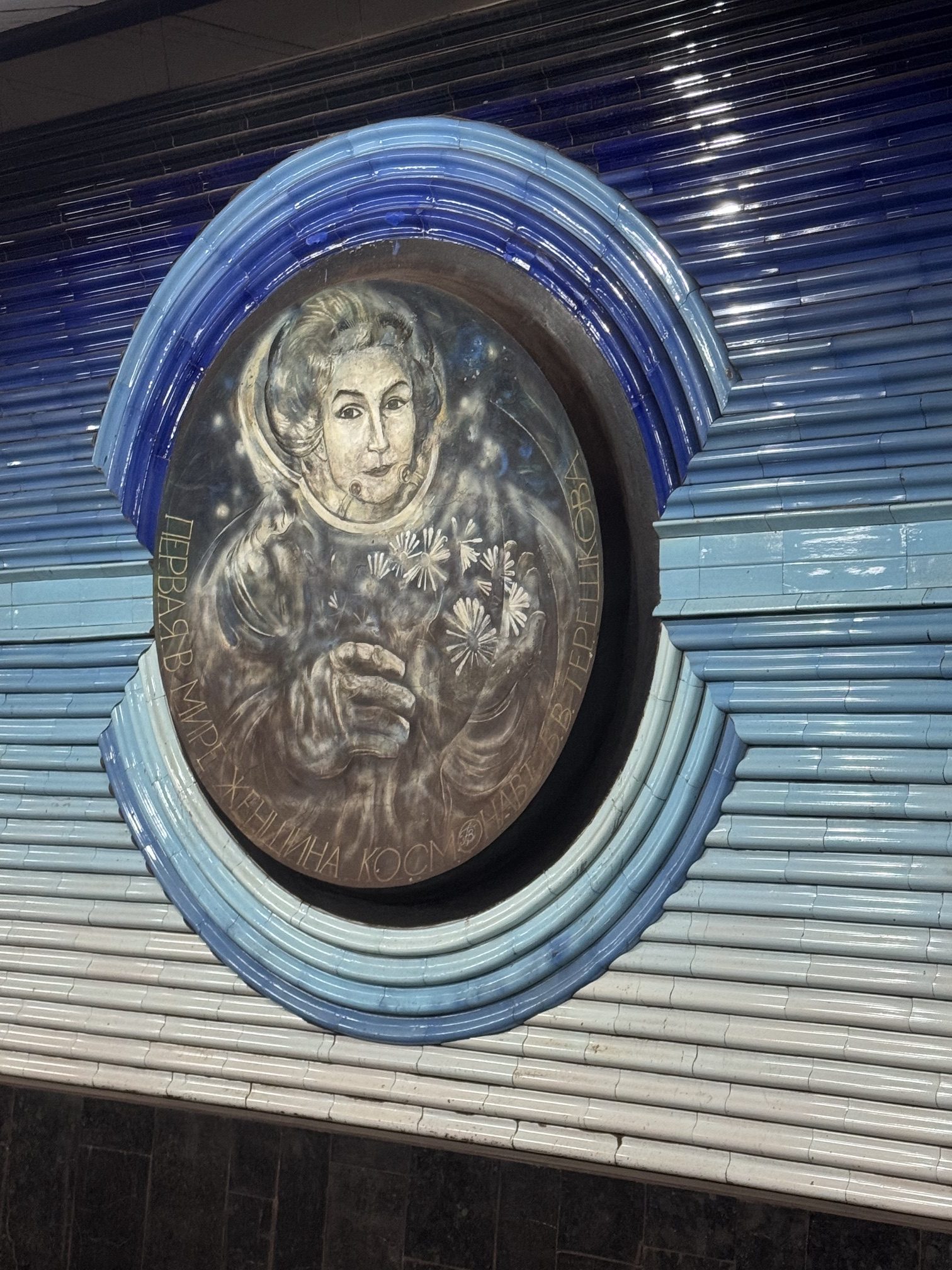
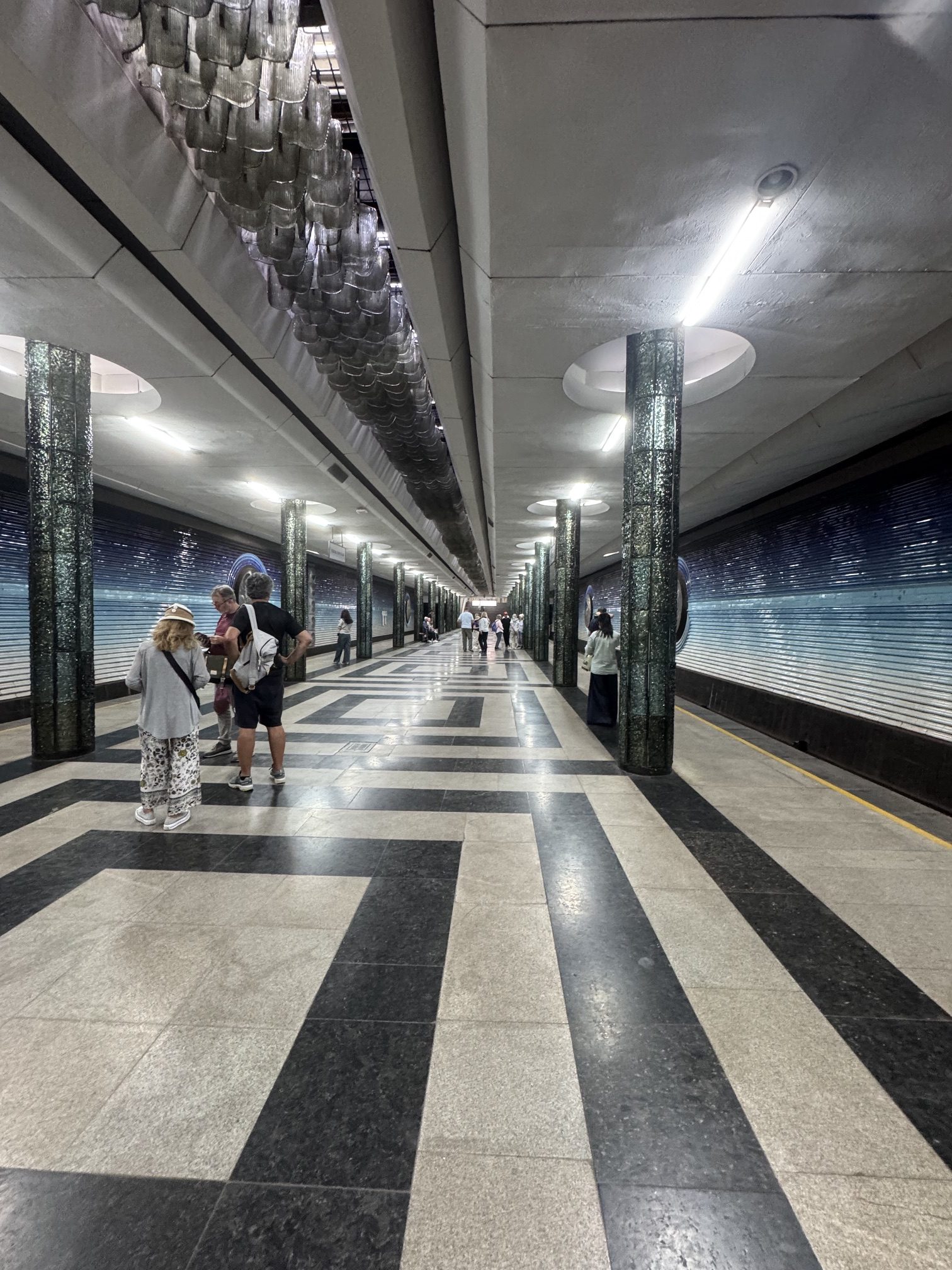
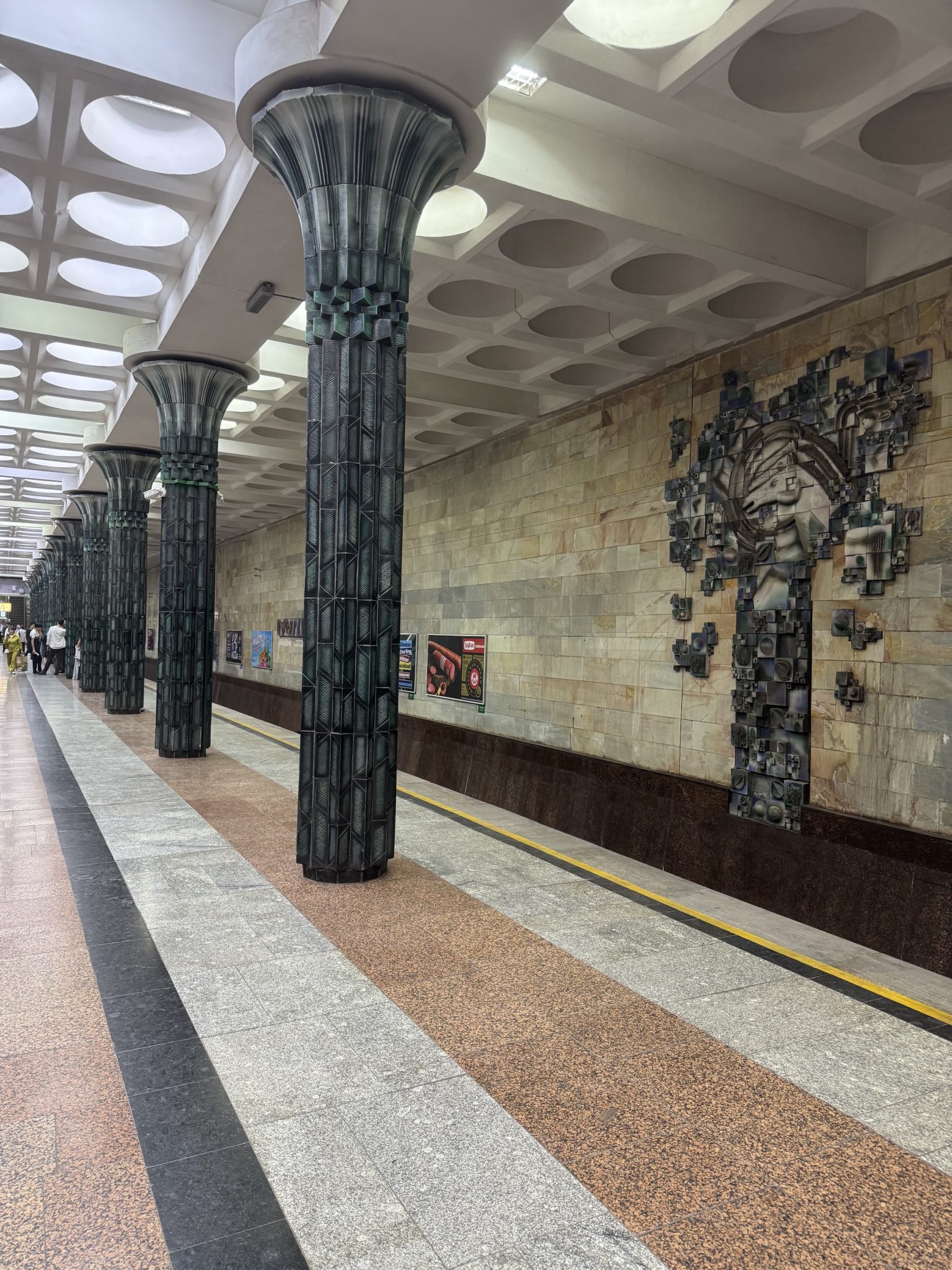
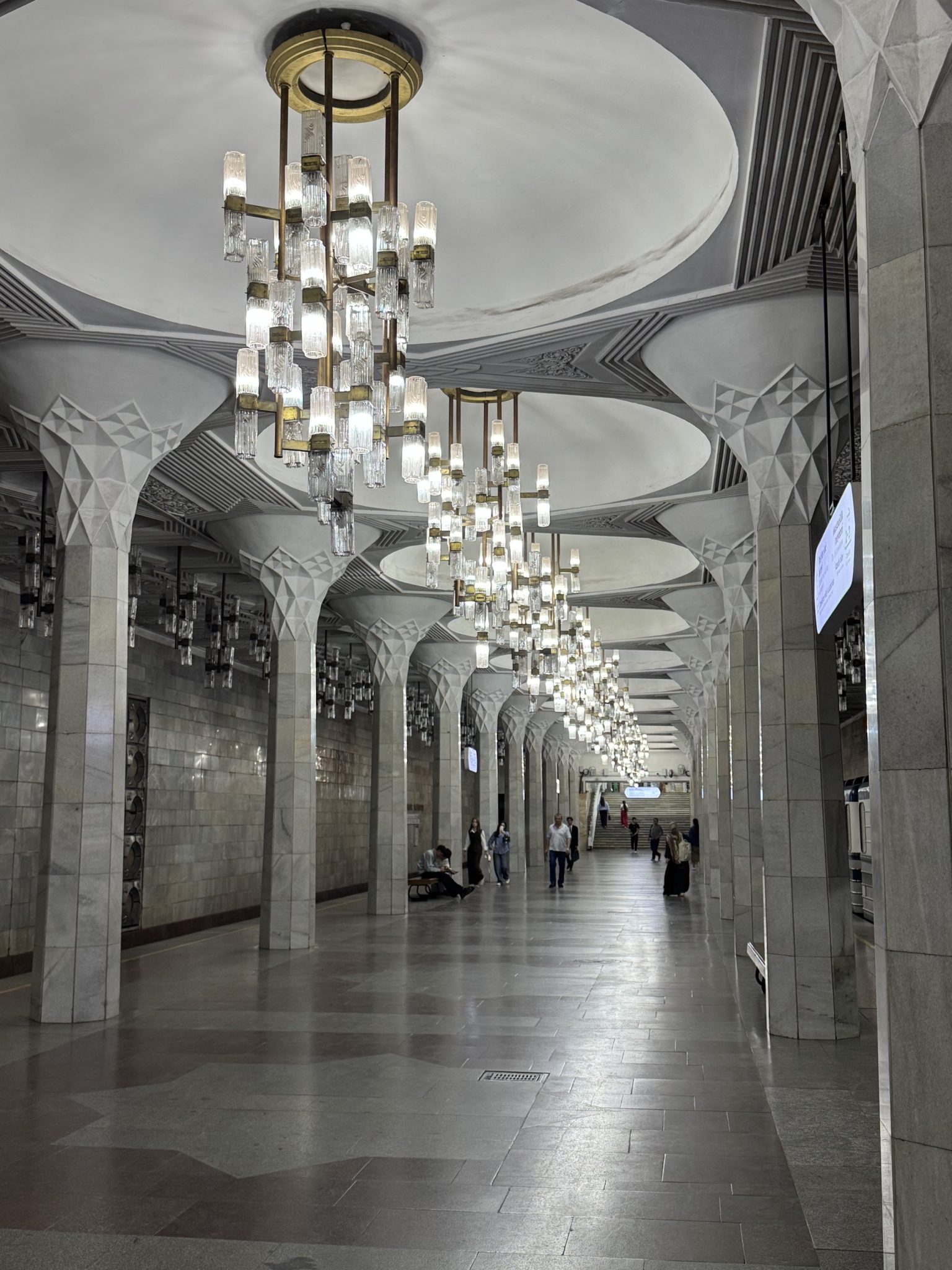
And the metro in Tashkent is a marvel. As someone said when I showed them a photo, ‘It’s a slight improvement on the Northern Line.’ Each station focuses on a theme and is magnificently opulent. One station focuses on cotton, as that is a major crop in Uzbekistan, and another features Russian cosmonauts, including the first woman in space, Valentina Tereshkova who blasted into orbit in 1963.
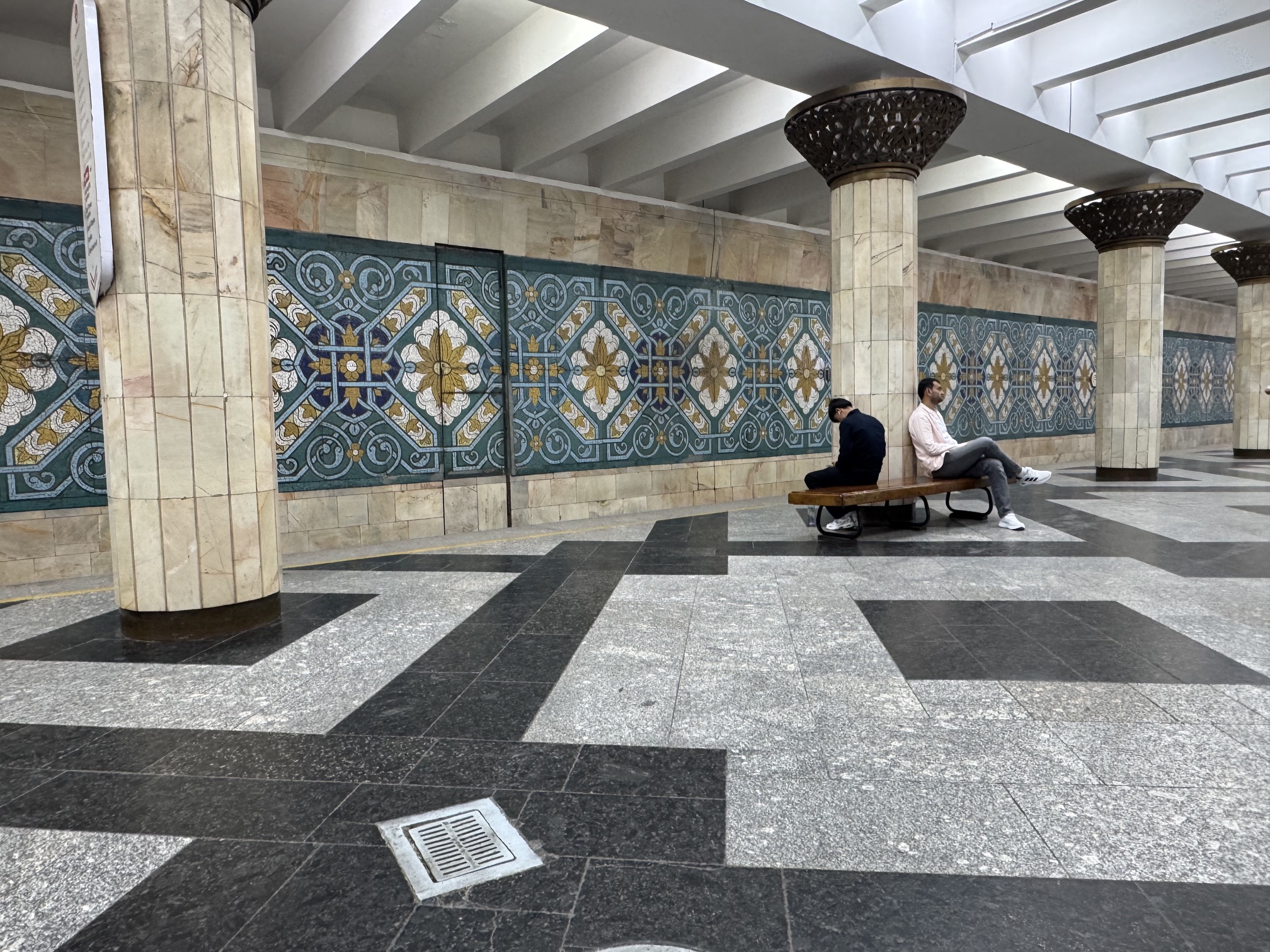
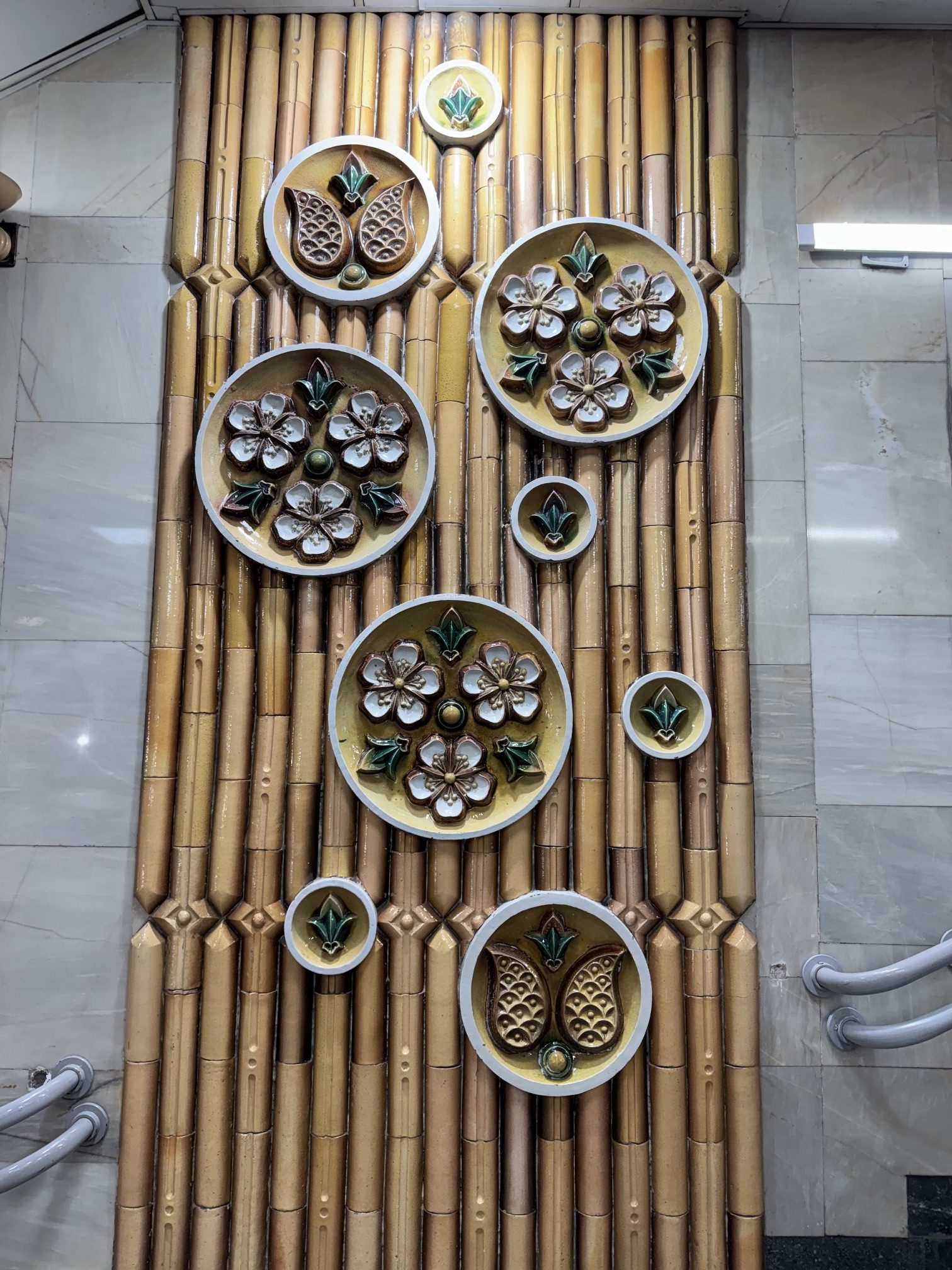
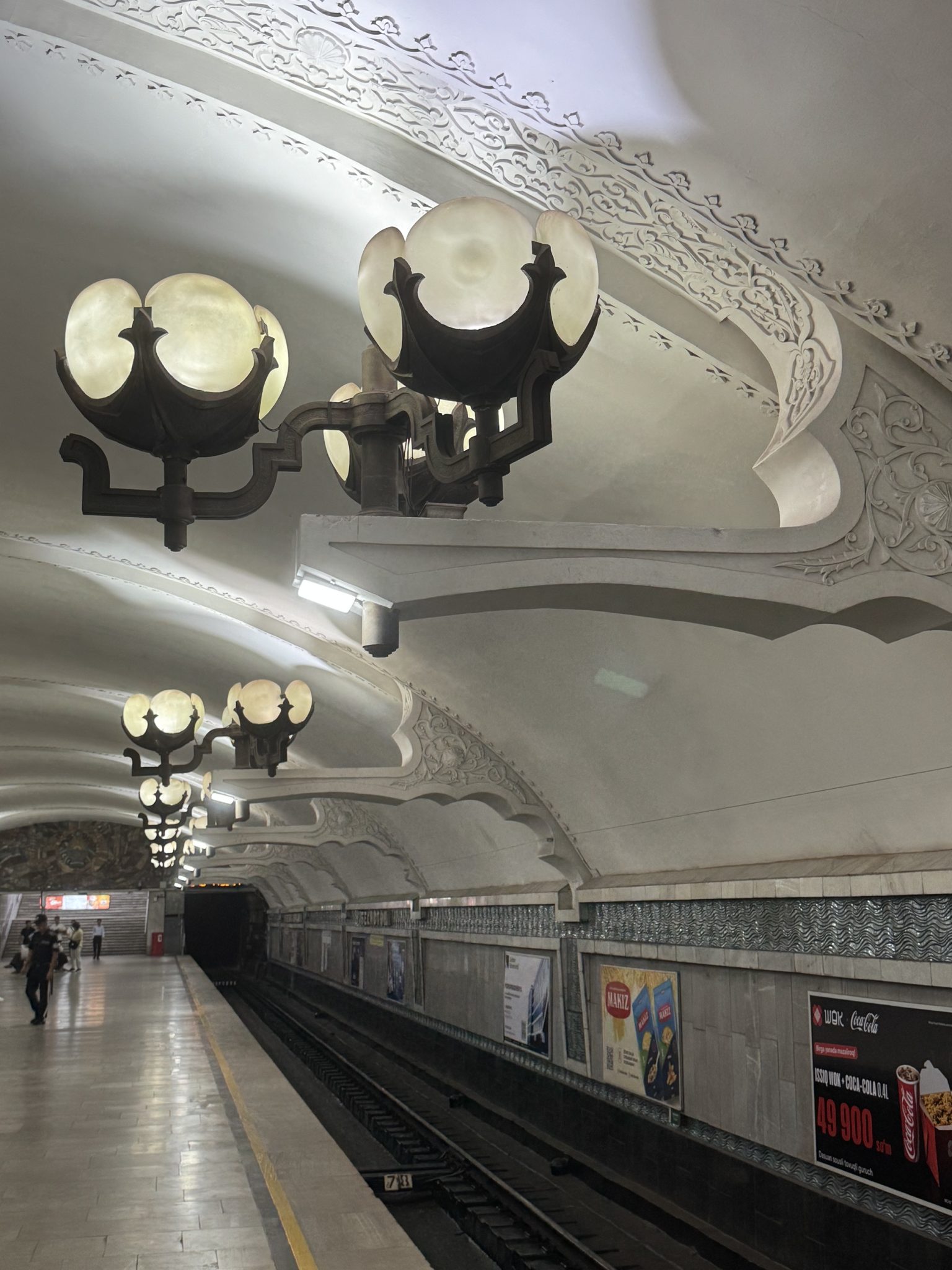
One thing that struck me while travelling on the metro (figuratively, I hasten to add) is that five of the major stations are named after writers, four Uzbek poets and writers, and then Pushkin has a station too. Apart from John Lennon Airport I couldn’t think of any other facility in the UK named after anyone who has any connections with writing.
Gafur Gilom was the 20th Century’s most influential Uzbek writer, and his station features ceramics with scenes from his books and grand pillars.
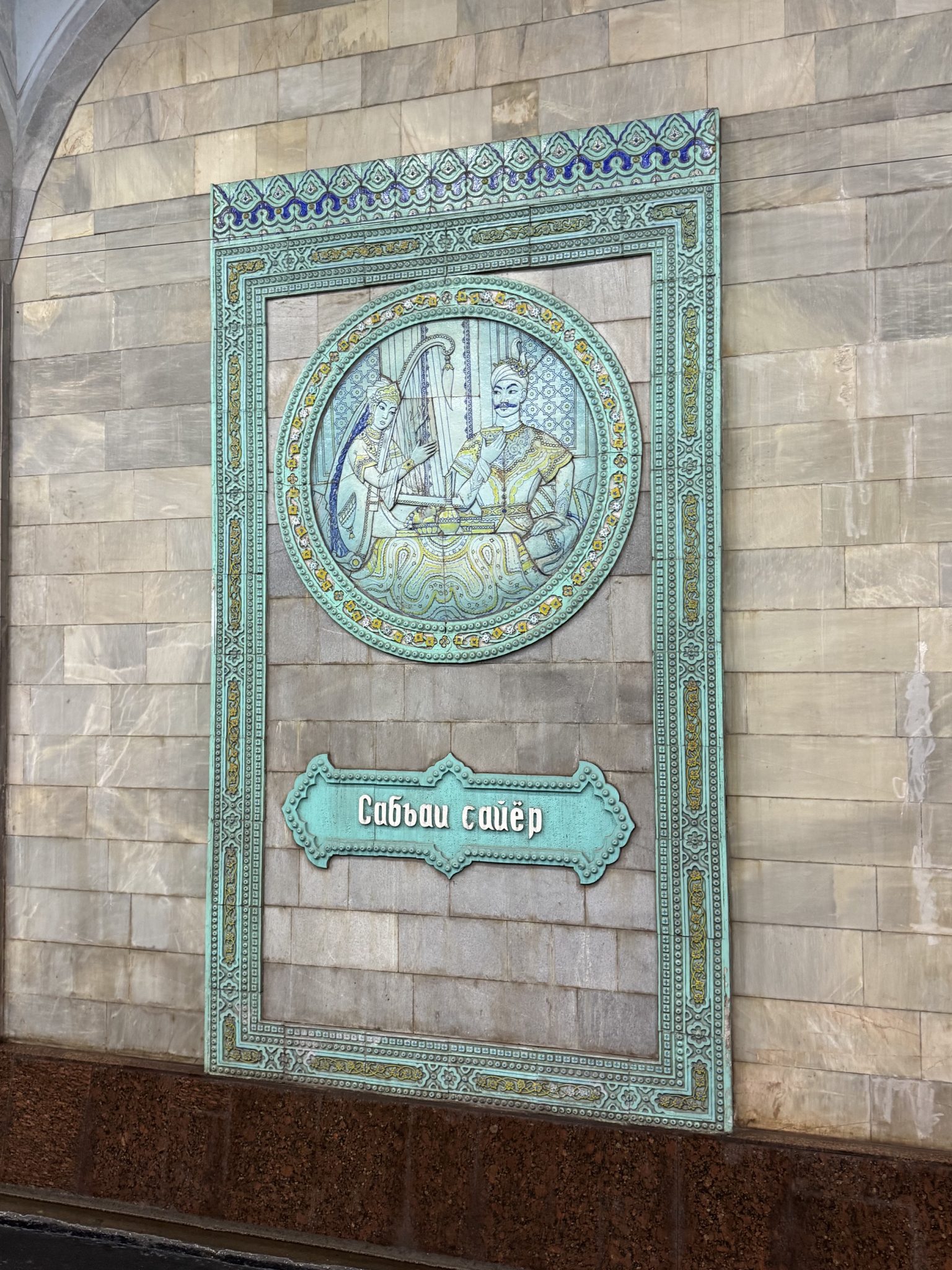
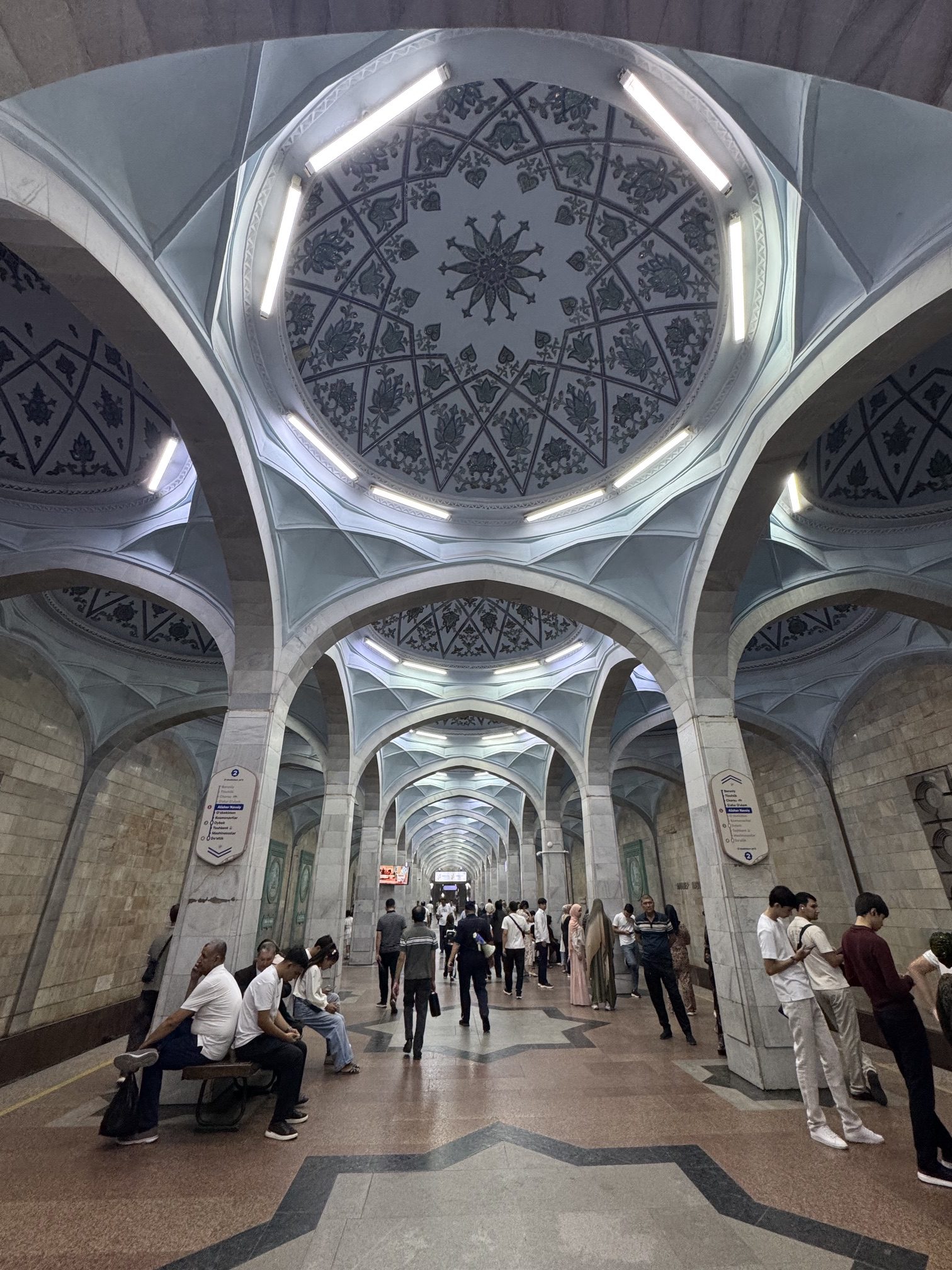
Alisher Navoi was a 15th Century poet, writing at the peak of Silk Road fame, and his station has intricately painted domes resembling the mosques and madrassas of that period.
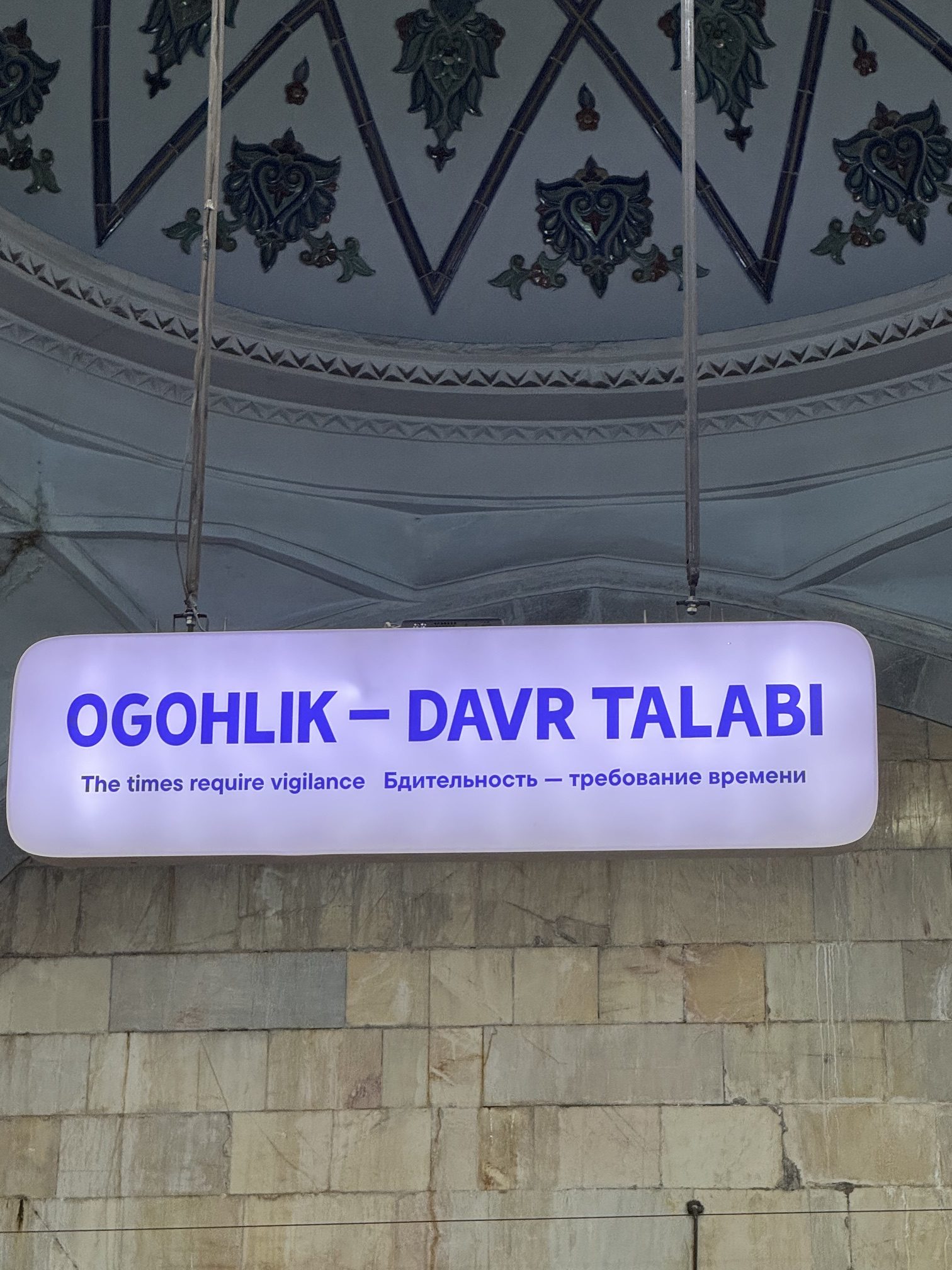
And lastly, this was my favourite station … Mustaqillik Maydoni. It used to be called Lenin Station but has now been renamed and means Independence Square. It’s built almost entirely from marble from Western Uzbekistan.
Perhaps if I keep writing my Polynesia Henman murder mysteries, Tashkent will name a metro station after me …