Genghis Khan destroyed Samarkand and Bukhara in the early 13th Century. His MO was simple – he would ride up to a city accompanied by his Mongol horde, bang on the gates and say, ‘Do you surrender, yes or no?’ If they said no, he destroyed the city and killed everyone – in Bukhara the inhabitants took refuge in the mosque so he set fire to it. It seems to me a tad foolish to resist when you can see the trail of annihilation stretching across Asia, but death or glory has always been very attractive to some people, I suppose.
And if we want to look on the bright side, this barbarous destruction gave Timur, or Tamerlane, a blank slate when he came to power in the 14th Century. Now, although Timur was a brutal military leader, like Genghis, he was also a patron of the arts who sparked a cultural renaissance in Central Asia … think Vlad the Impaler meets Peggy Guggenheim. The craftsmen Timur employed to rebuild Samarkand contributed hugely to the development of Islamic architecture and exerted great influence across the region.
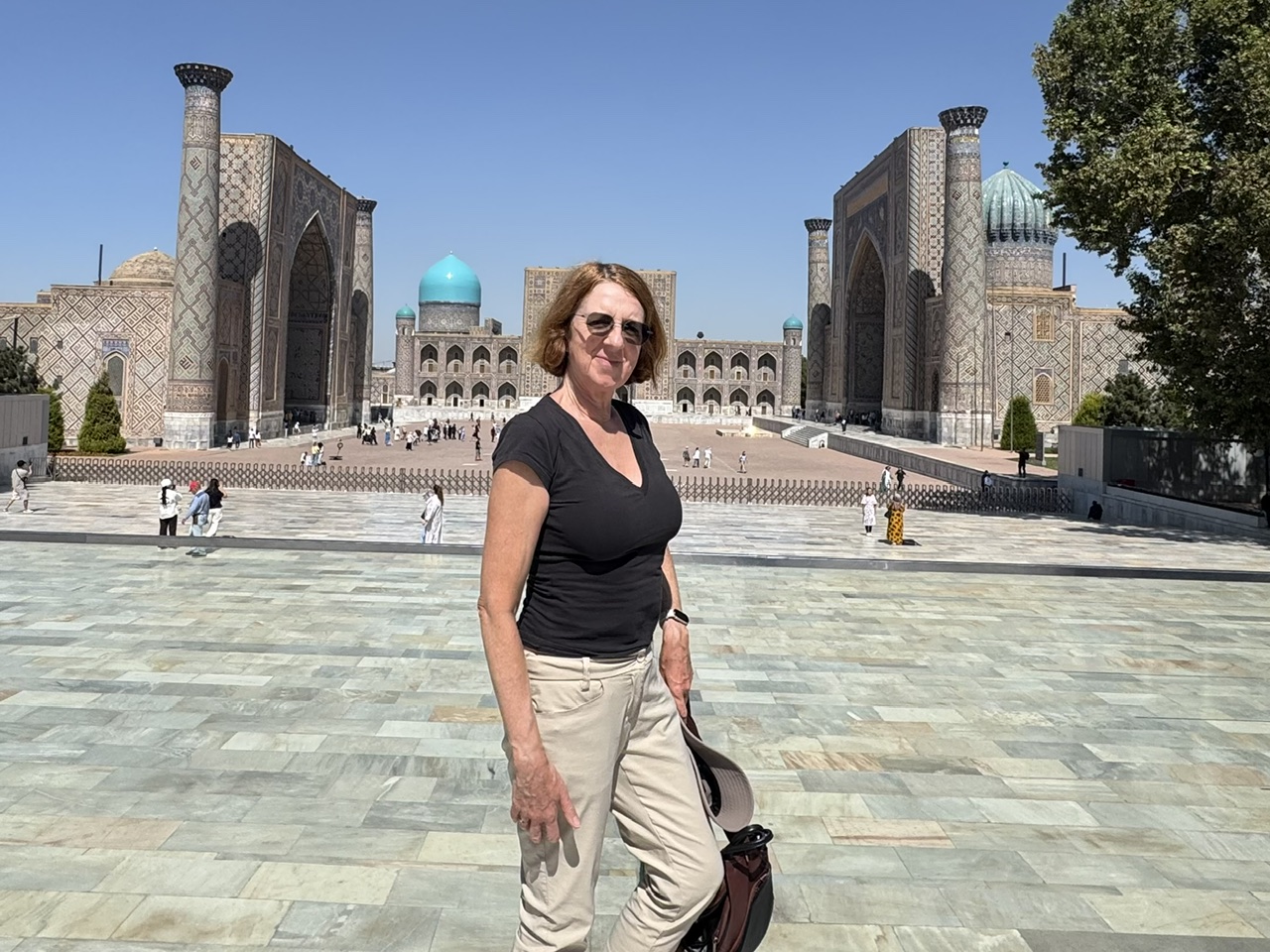
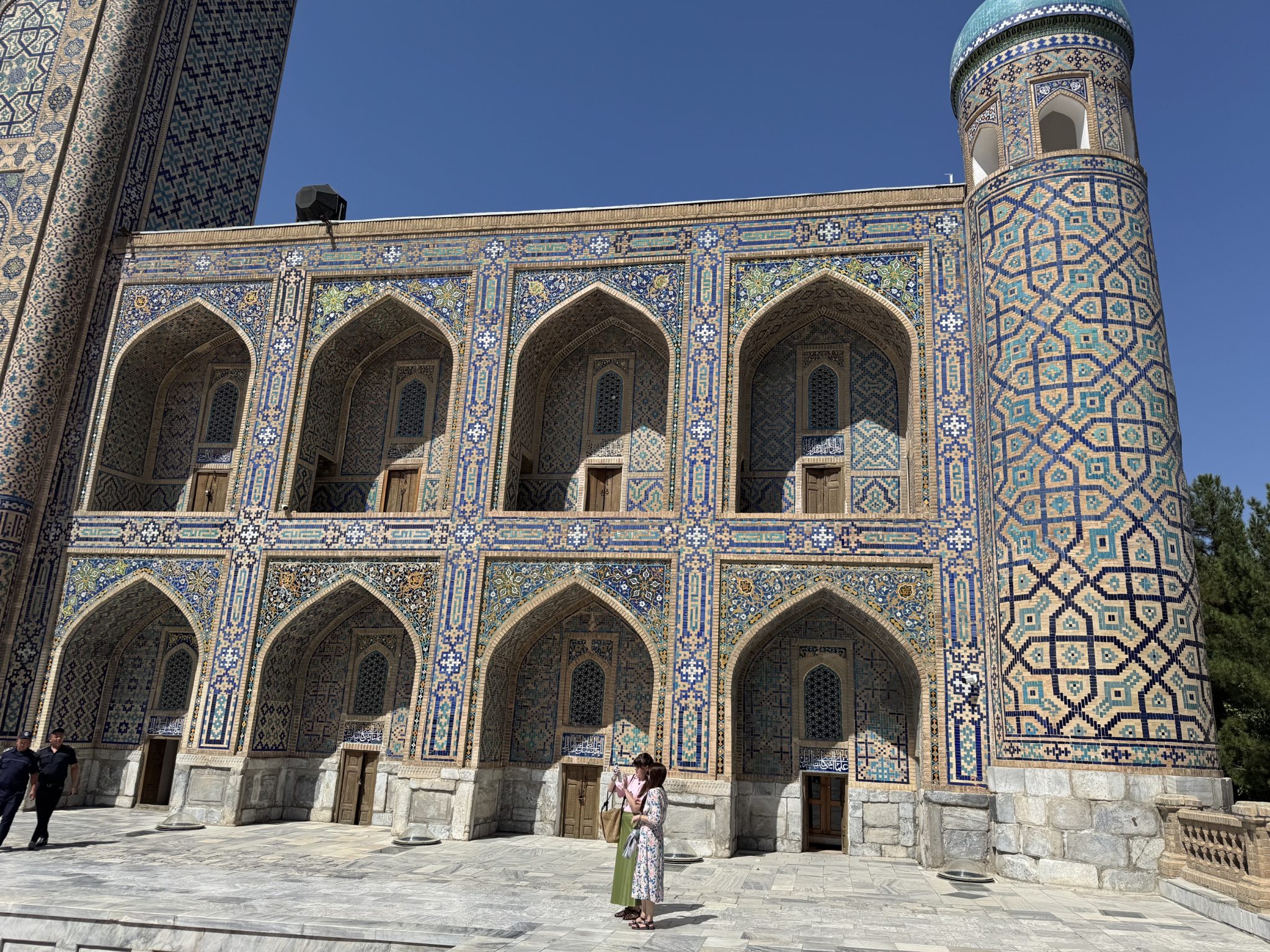
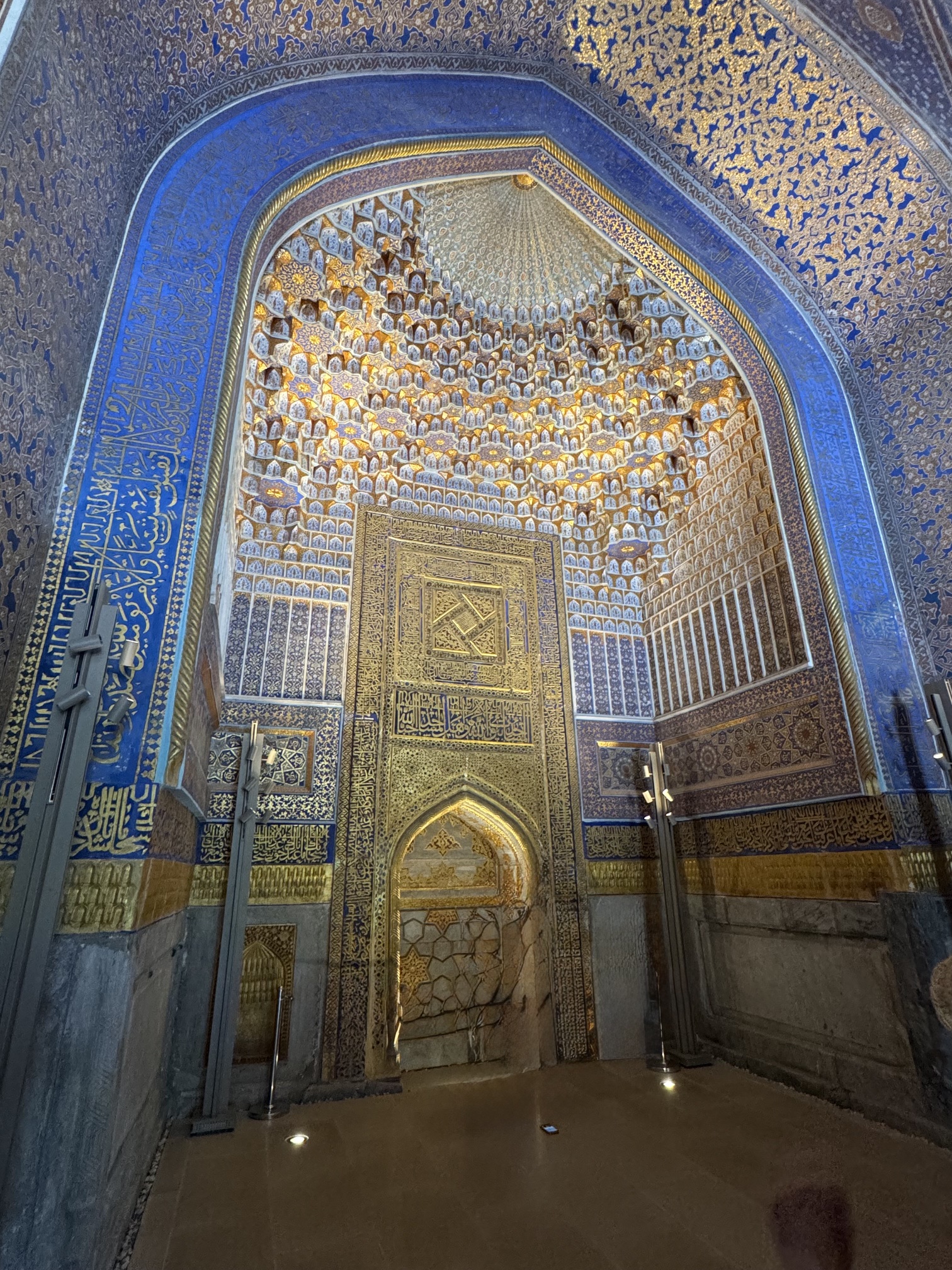
Registan Square is just too jaw-dropping for a photo to do it justice. It’s a series of three madrassas, or religious universities, and the interiors are just as spectacular as the exteriors.
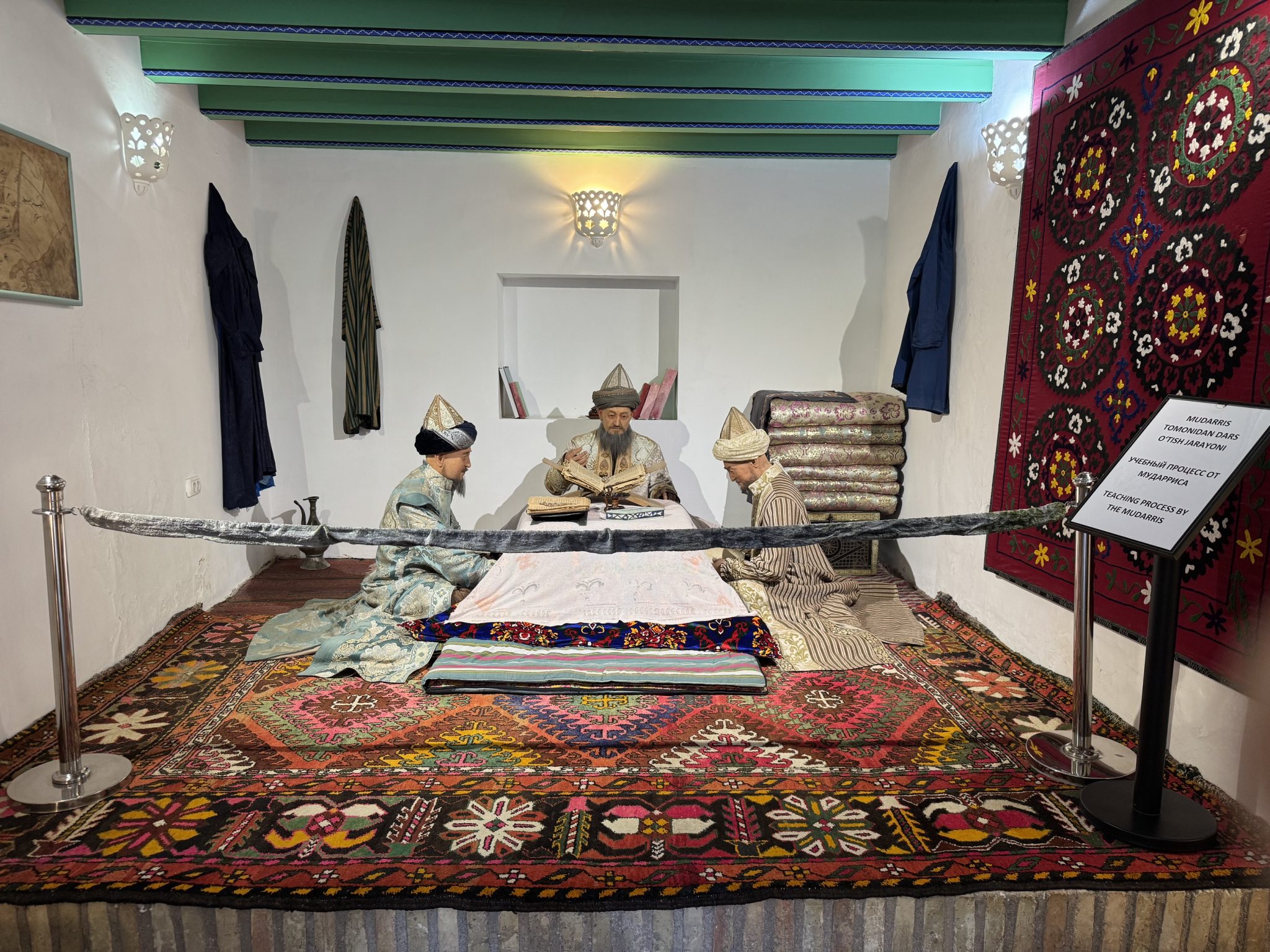
The students lived in these wonderful, mosaic-covered buildings which had mosques attached for prayers.
Timur also designed and built his own exquisite mausoleum. Unfortunately, every time Timur named a successor, they died in mysterious circumstances and are also buried in his mausoleum. Eventually he gave up naming successors and his Empire was divided up after his death. The Moghul rulers of India were direct descendants of Timur, and it’s said that his mausoleum was the inspiration for the Taj Mahal.
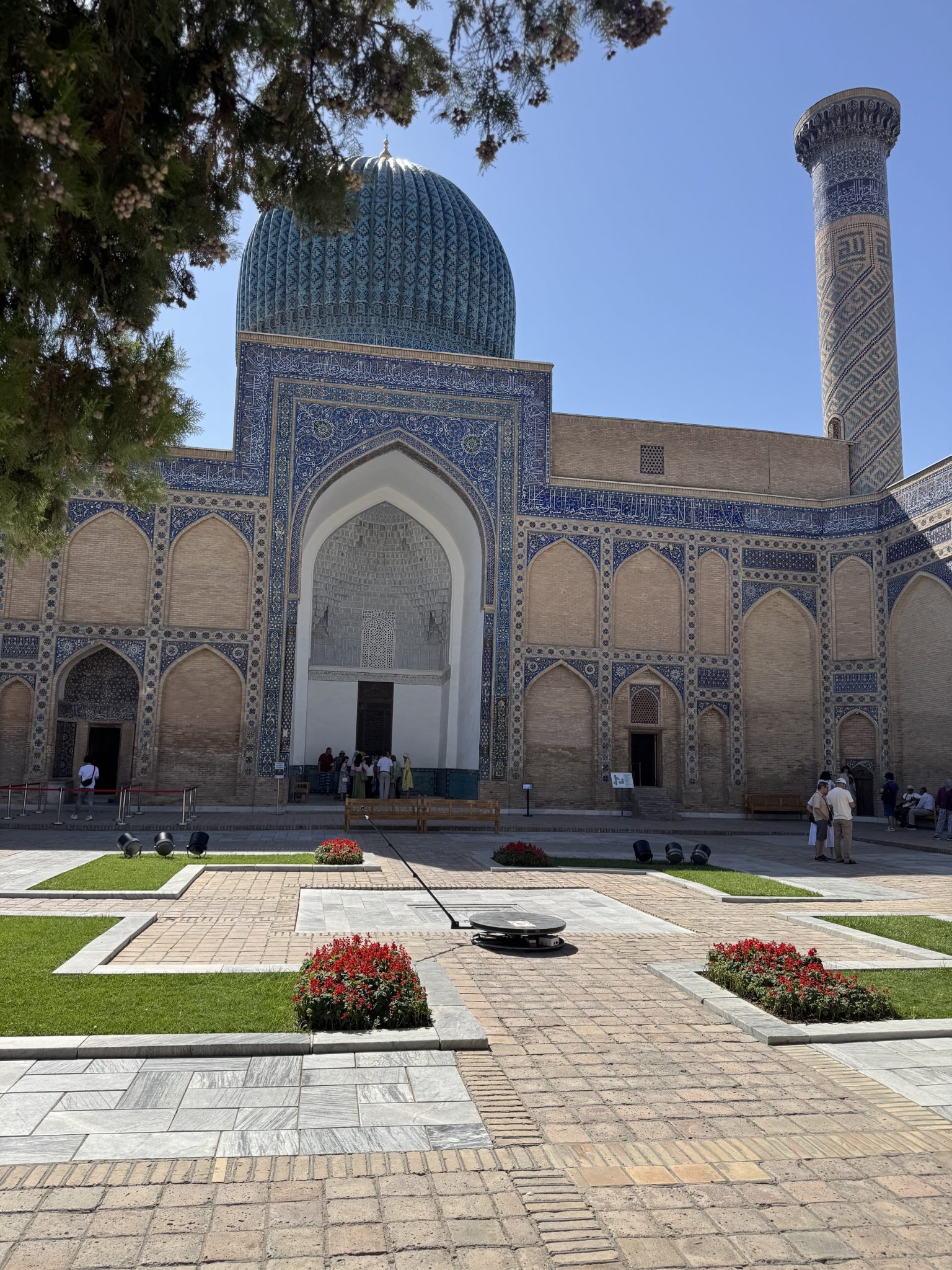
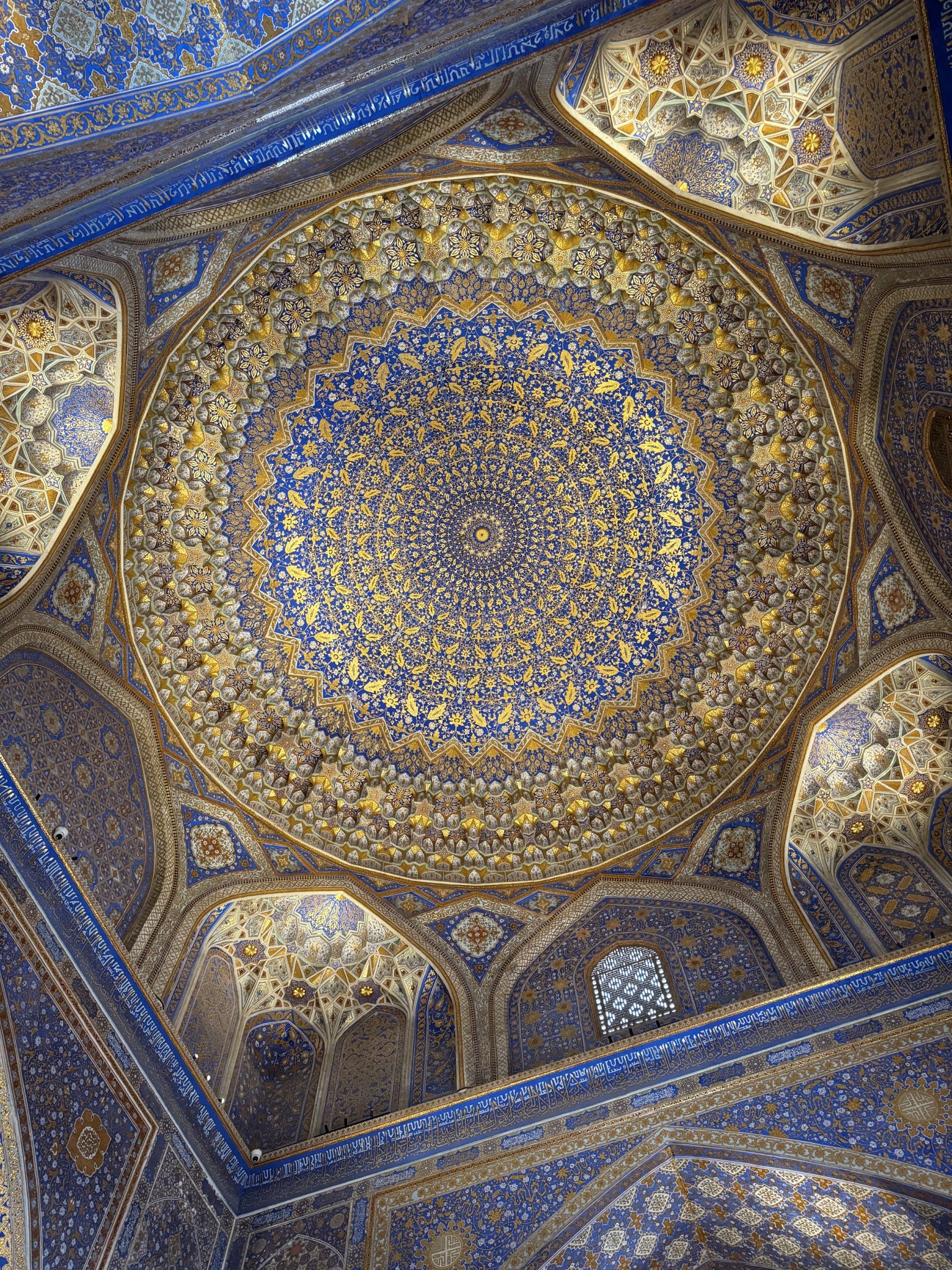
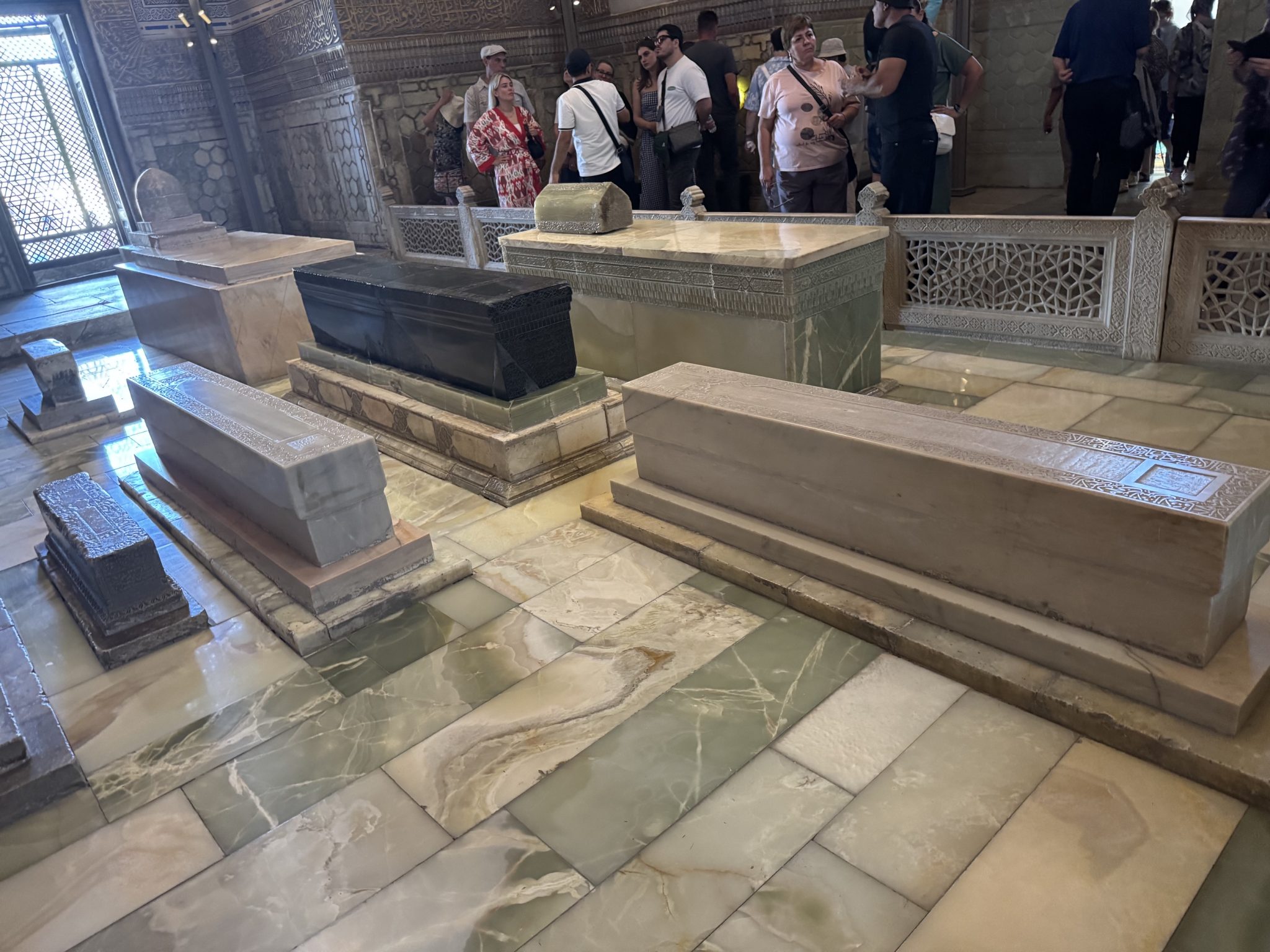
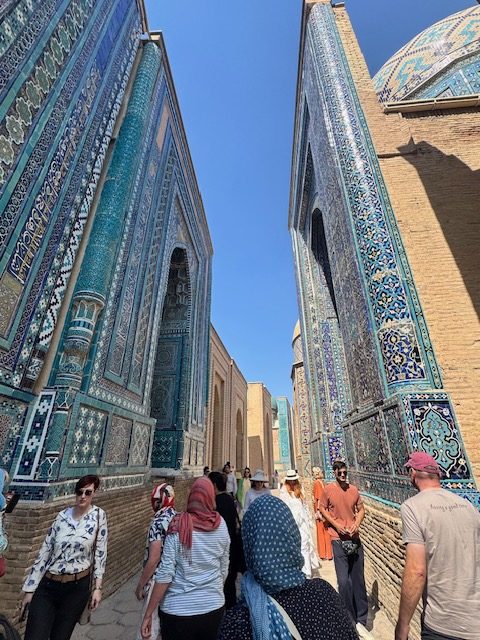
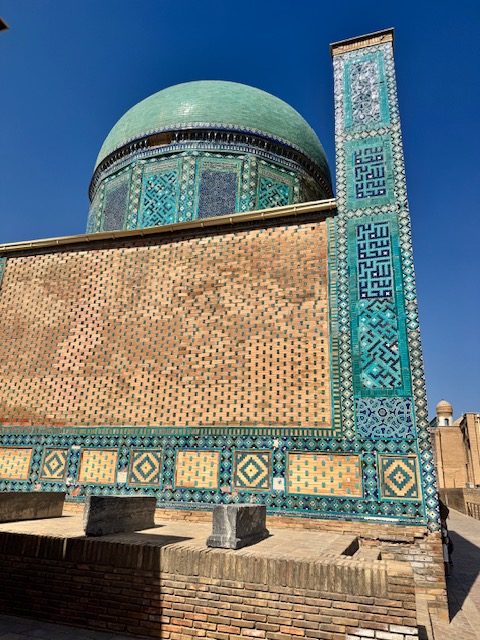
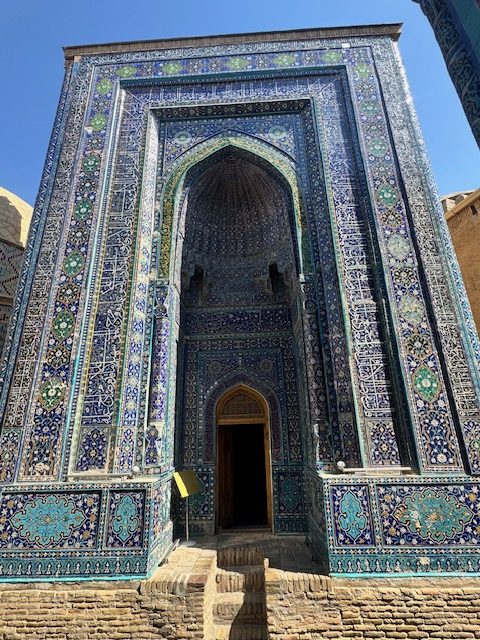
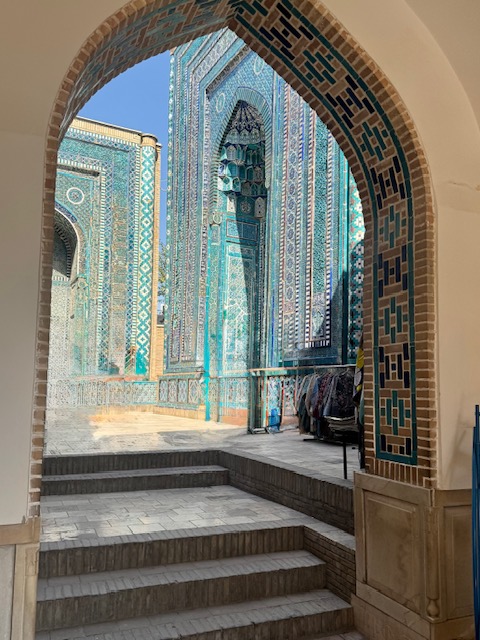
Continuing on the theme of death, there is a mausoleum complex in the city, dating back to the 14th Century and containing a magnificent collection of mausoleums of the local nobility. They are built on either side of a narrow street, and each building looks more elaborate and beautiful than the previous one. Some of Timur’s female relatives are buried here and a cousin of Mohammed’s. They are mainly decorated with majolica tiles in intricate geometric designs.
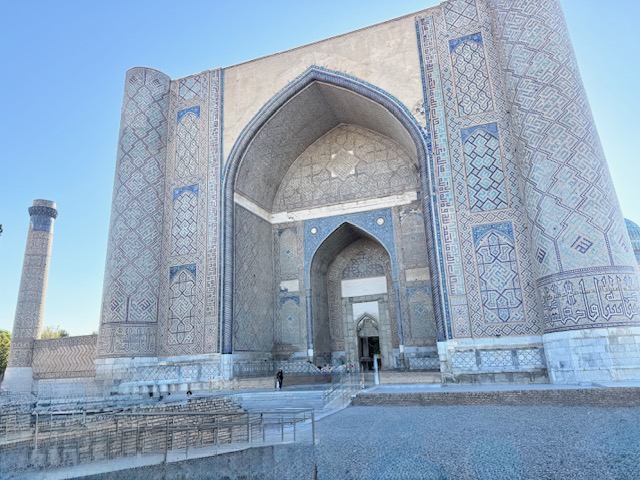
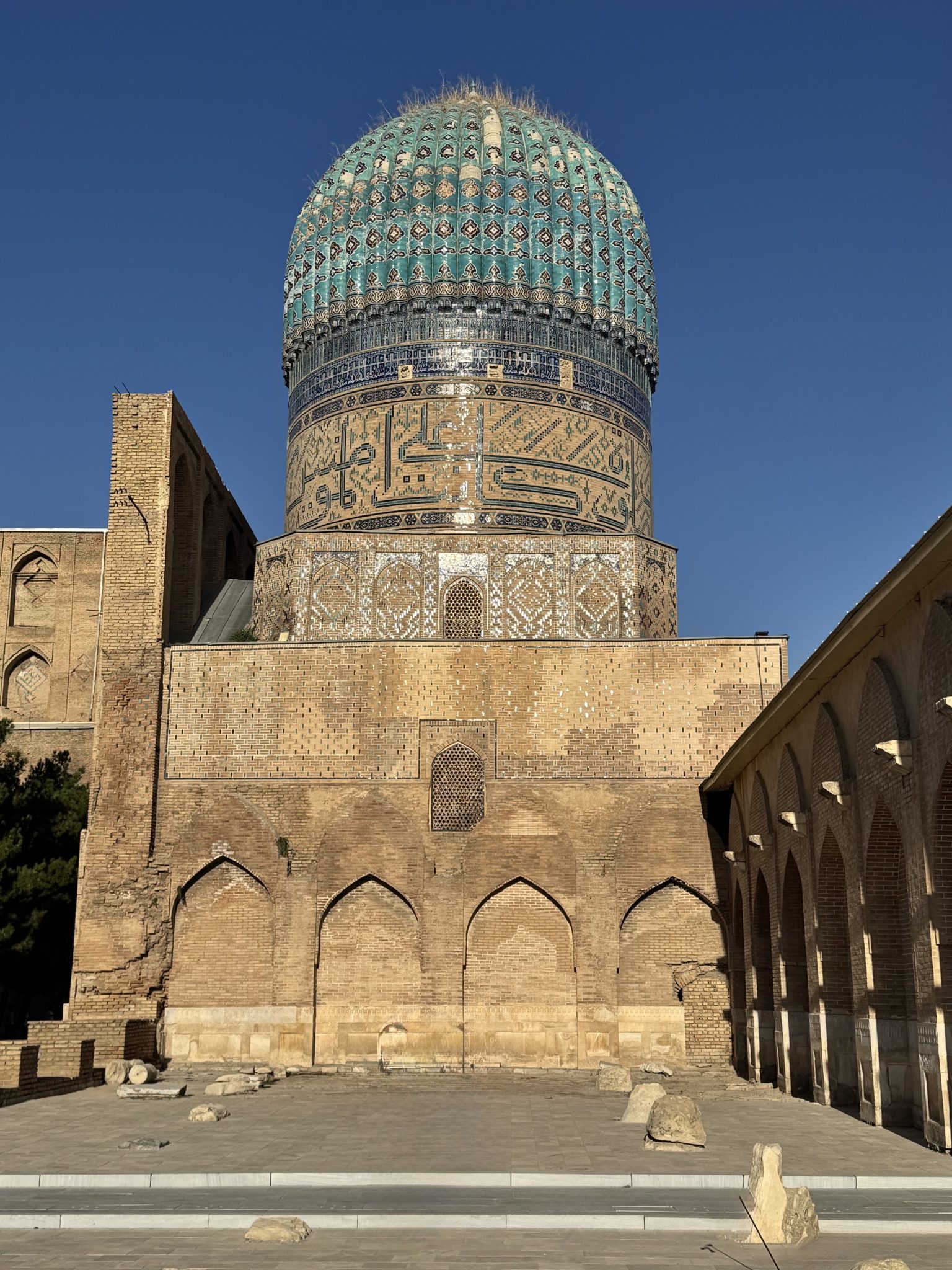
And the final stop on my architectural tour of Samarkand, was the Bibi-Khanum mosque. She was Timur’s number one wife, mainly because it was her royal blood that enabled him to claim the throne, and he decided to honour her with a mosque. He saw a Hindu temple near Delhi which he loved, so it ordered it to be destroyed and the materials sold and he used the money to build a similar-looking mosque for his wife. It was enormous and could hold ten thousand worshippers at a time. Unfortunately it wasn’t well maintained and had to be abandoned in the 16th Century after bits of masonry started falling off and killing people. It was renovated in 1997, but the dome still has plants growing out of it, making it look like a large blue cactus.
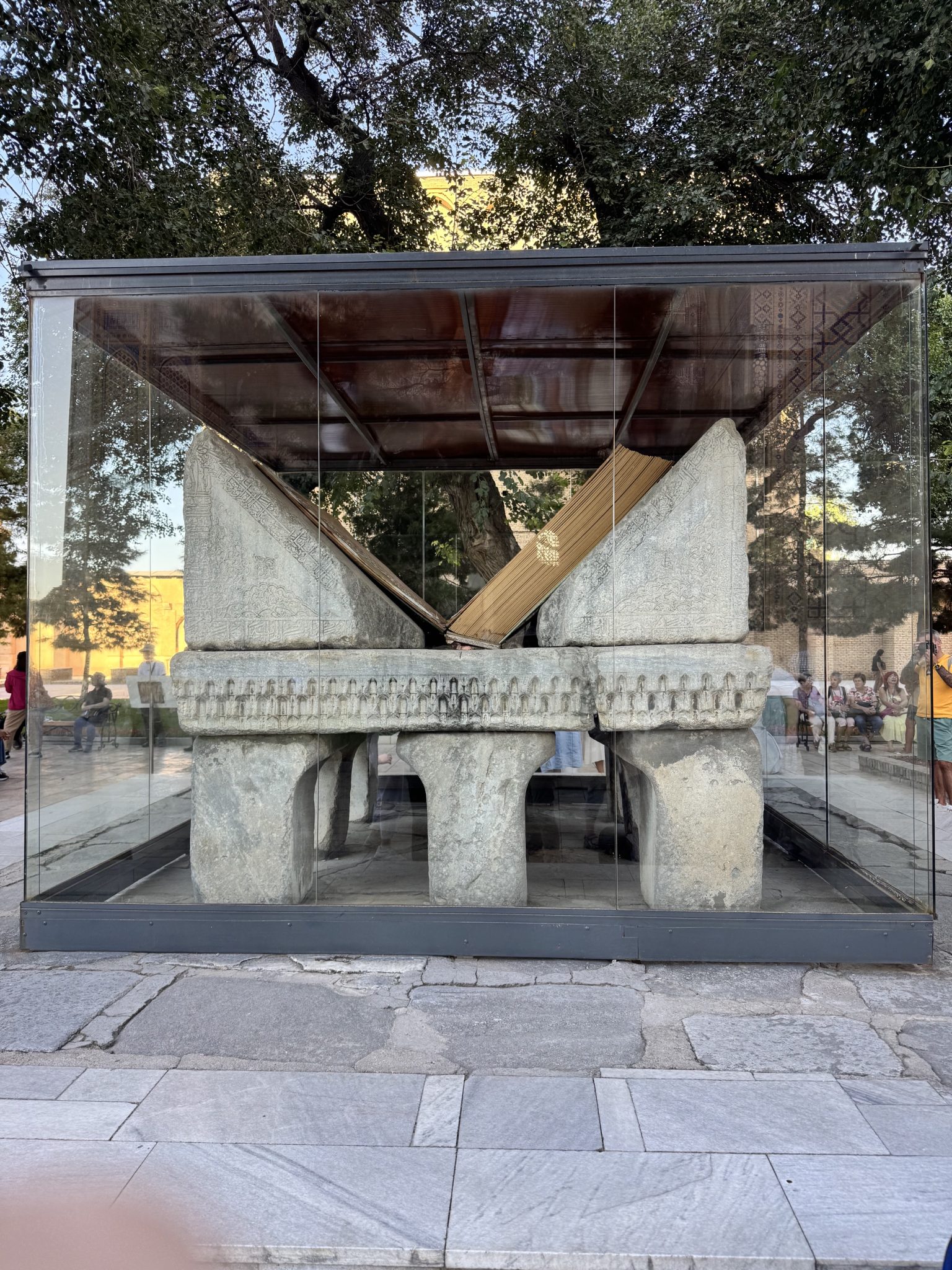
In the courtyard is Timur’s lectern built of solid marble and designed to hold a rare 7th Century copy of the Quran. A legend grew up over the centuries that if a woman crawled underneath it three times she would get pregnant. In 2022 they fenced the lectern off, but I’m not sure whether that was due to health and safety, or to keep the birth rate down.
The name Samarkand has always conjured up romantic exoticism for me: the jewel of the Silk Road. I was thrilled that it lived up to my (very high) expectations.