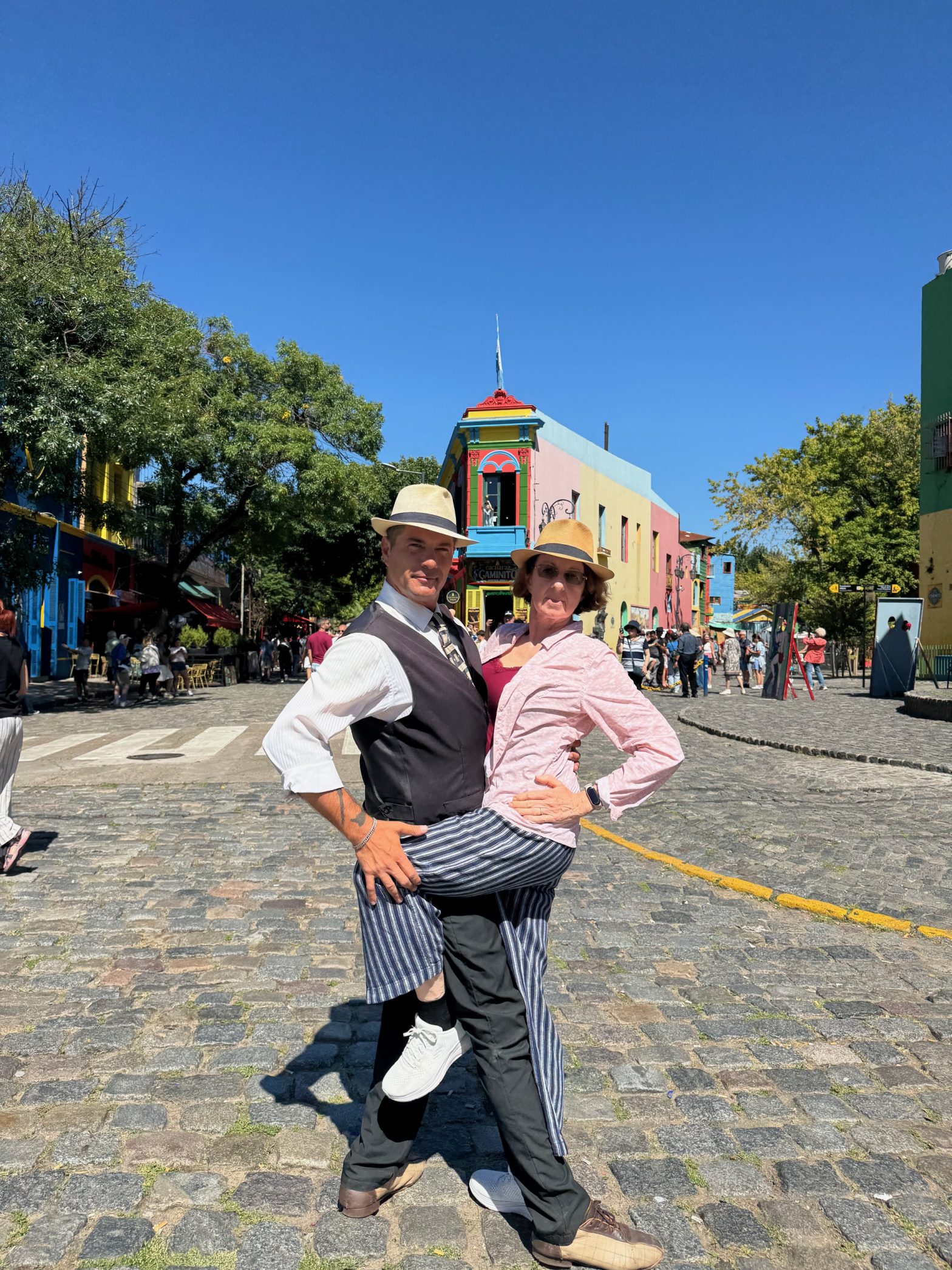
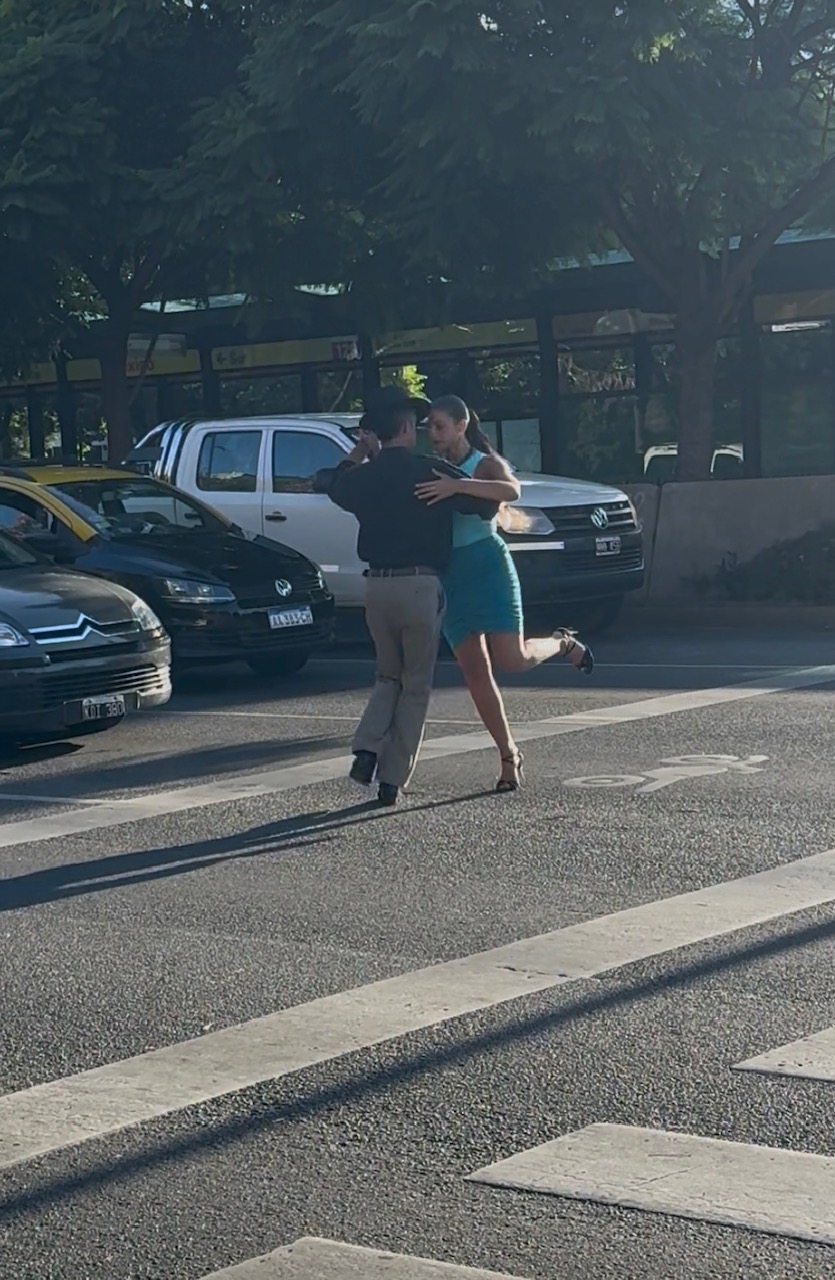
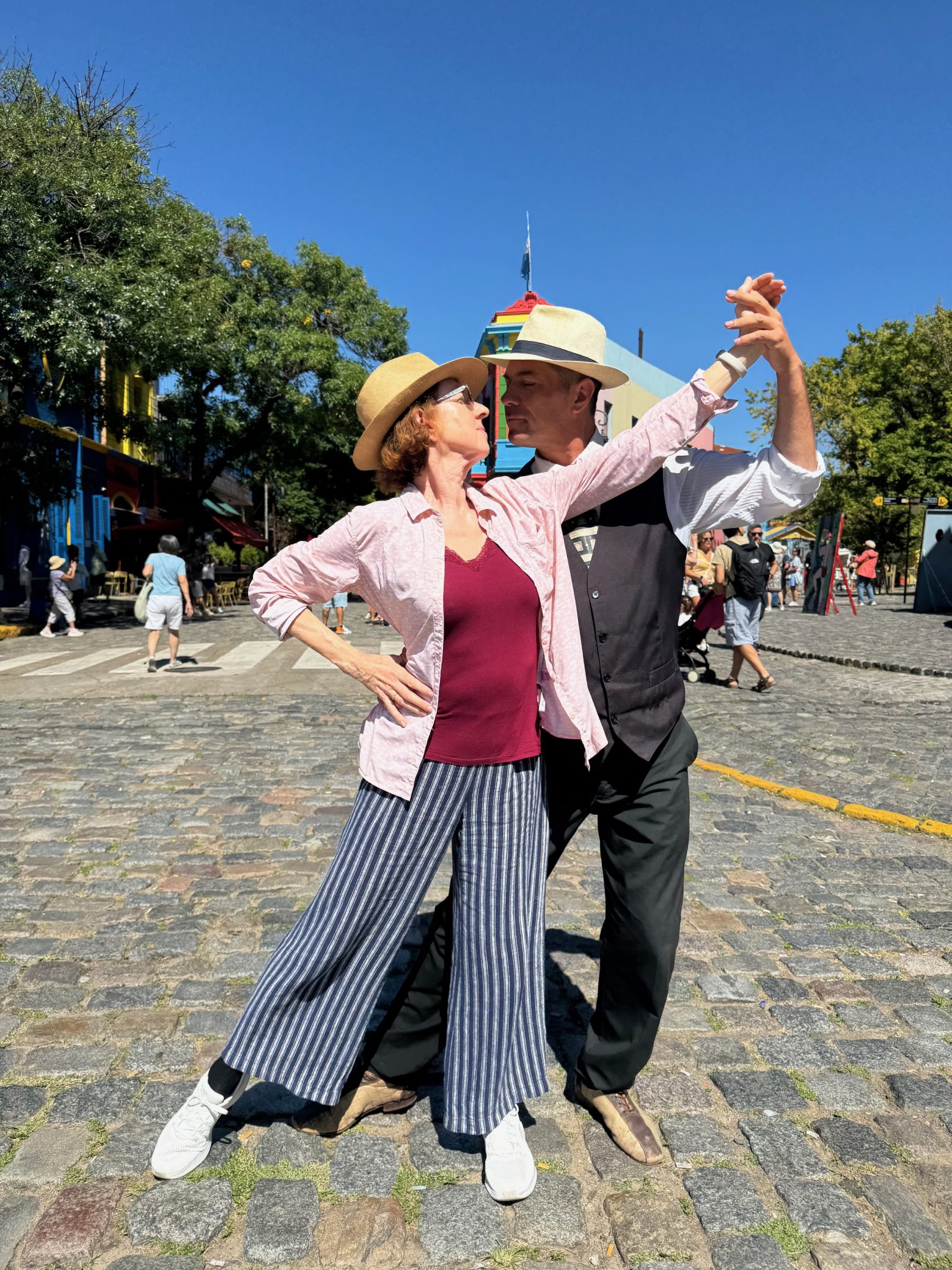
We all know that tango is synonymous with Argentina, but what I didn’t know is just how ubiquitous it is. I saw tango dancers in the street, touting for trade outside tango bars, and I was offered the chance to try out a few moves with a dancer while I stood waiting for a guided tour to begin. And I was bemused to see a couple dancing in front of five lanes of traffic being held at a red light. Every time the light turned green they scuttled back to the verge to wait until it turned red – and they weren’t asking for money … not even danger money … quite baffling.
But the best tango I saw was at the Secret Tango Club. The exact location is revealed a few hours before the show, and it turned out to be a cosy bar with space for about forty people where everyone had an excellent view. There was a singer, a pianist, an accordion player and two wonderful dancers whose body language spoke volumes about repressed emotion and hidden passions.
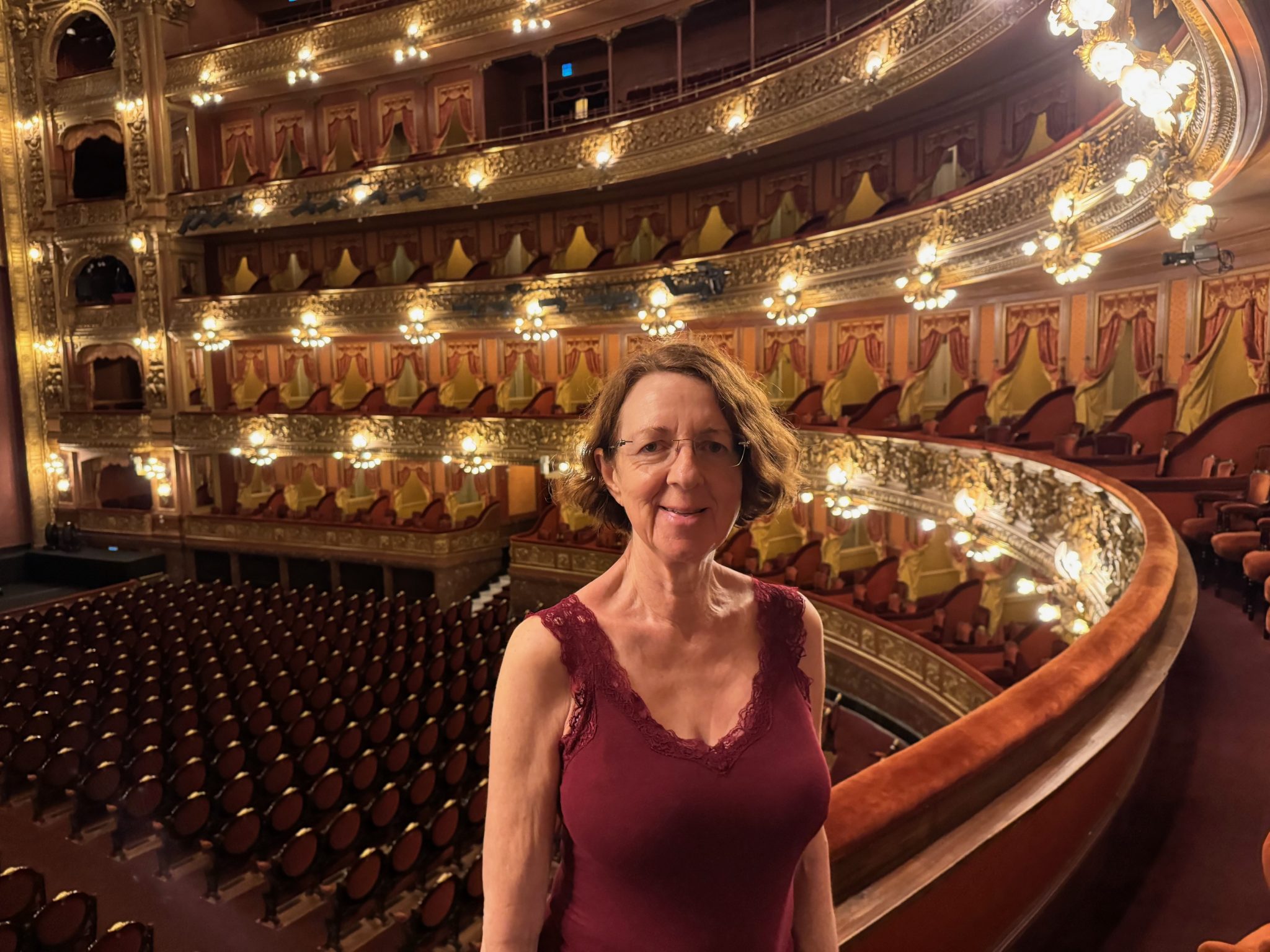
The Teatro Colon in Buenos Aires was devised with a modest ambition – they wanted to build the biggest opera house in the world. The Italian architect spent two years planning it, but died suddenly just before building started, so they hired his apprentice to take over – Vittorio Meano, another Italian. Unfortunately Vittorio was killed by his butler, after he discovered that his wife was having an affair with the butler, but luckily he’d done the bulk of the work by then.
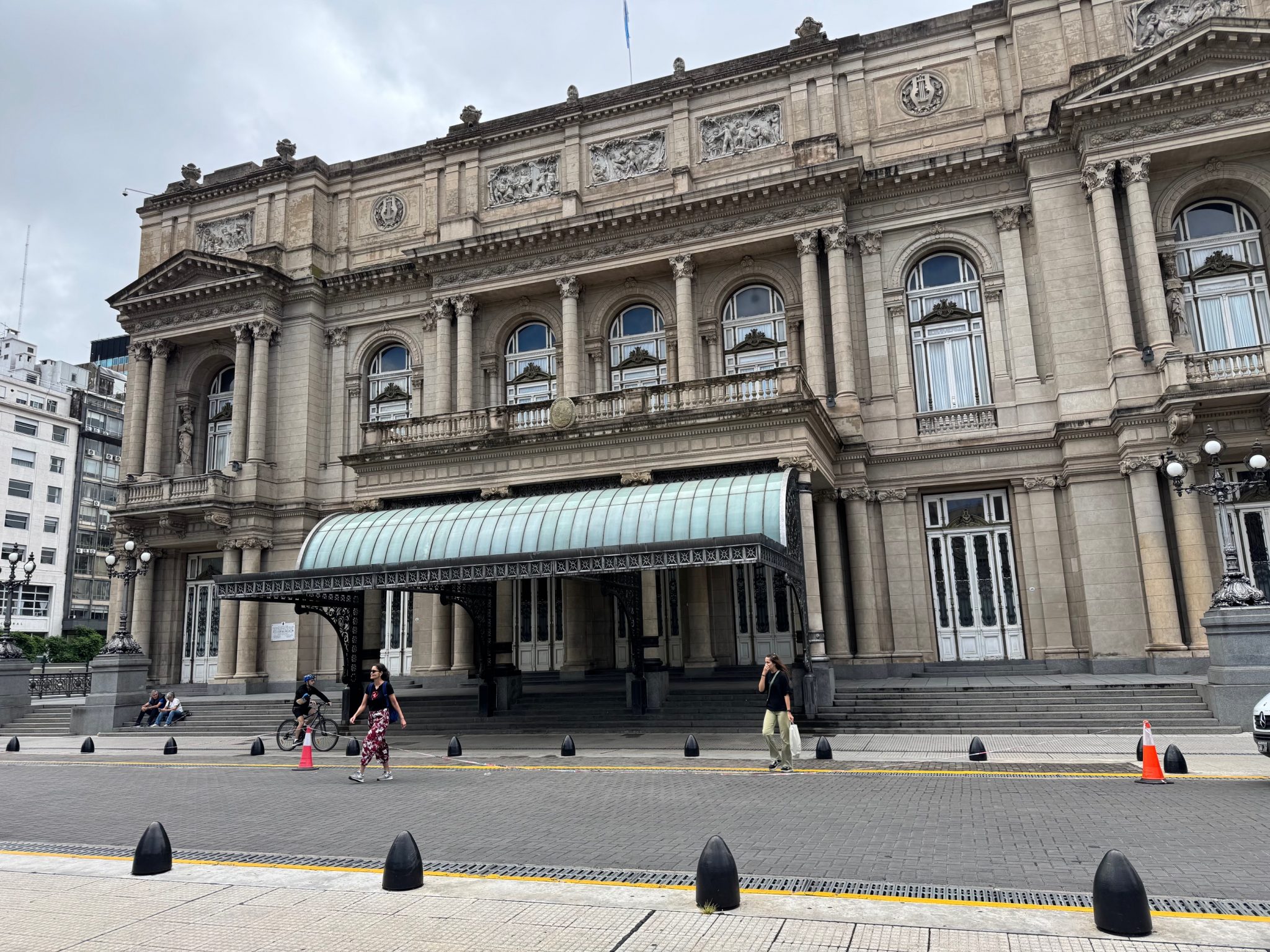
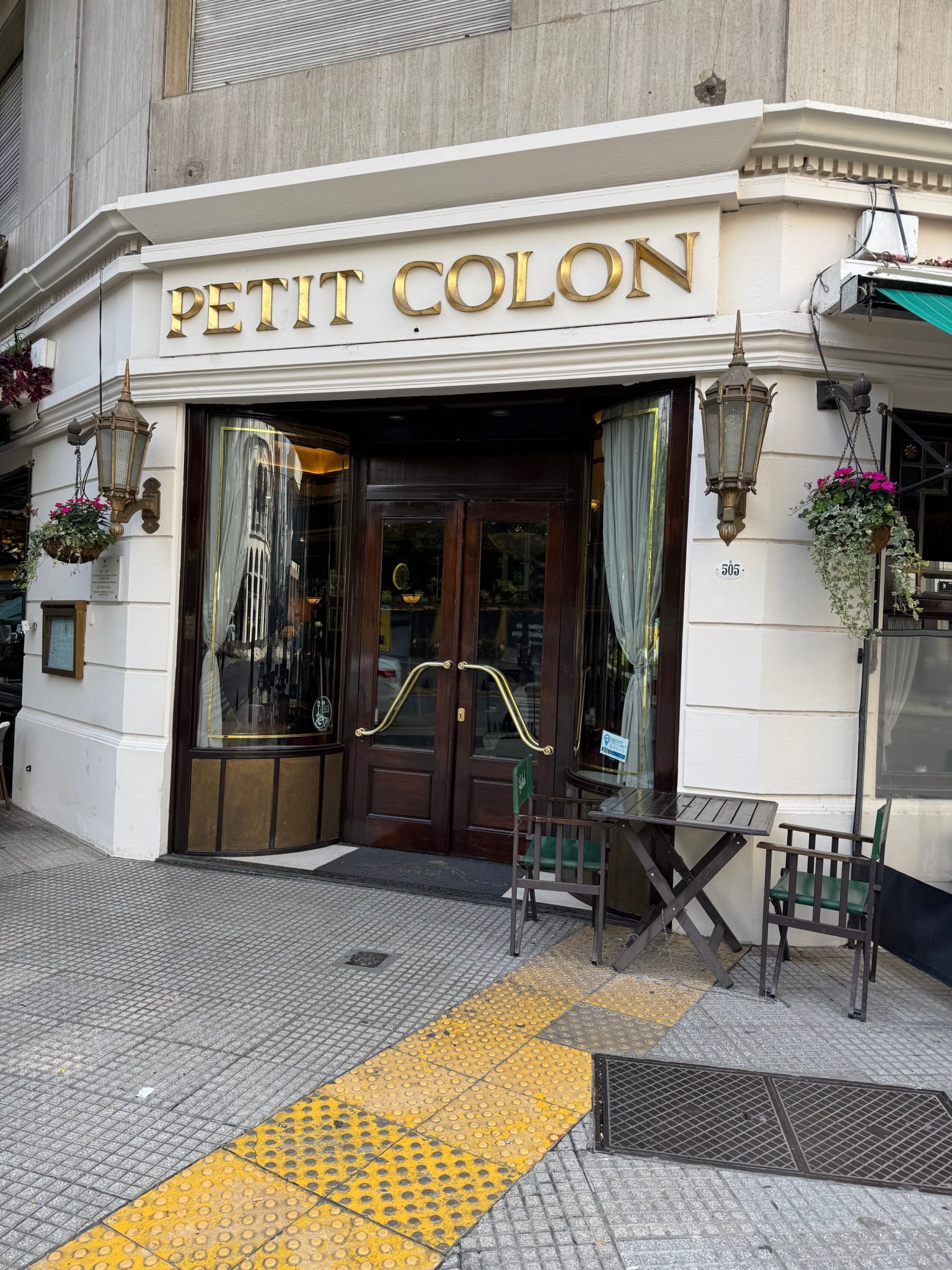
It’s now the second largest opera house in the Americas – after the Met – and it has perfect accoustics. Pavarotti was always anxious when he performed here as he knew that any tiny mistake would be hugely amplified.
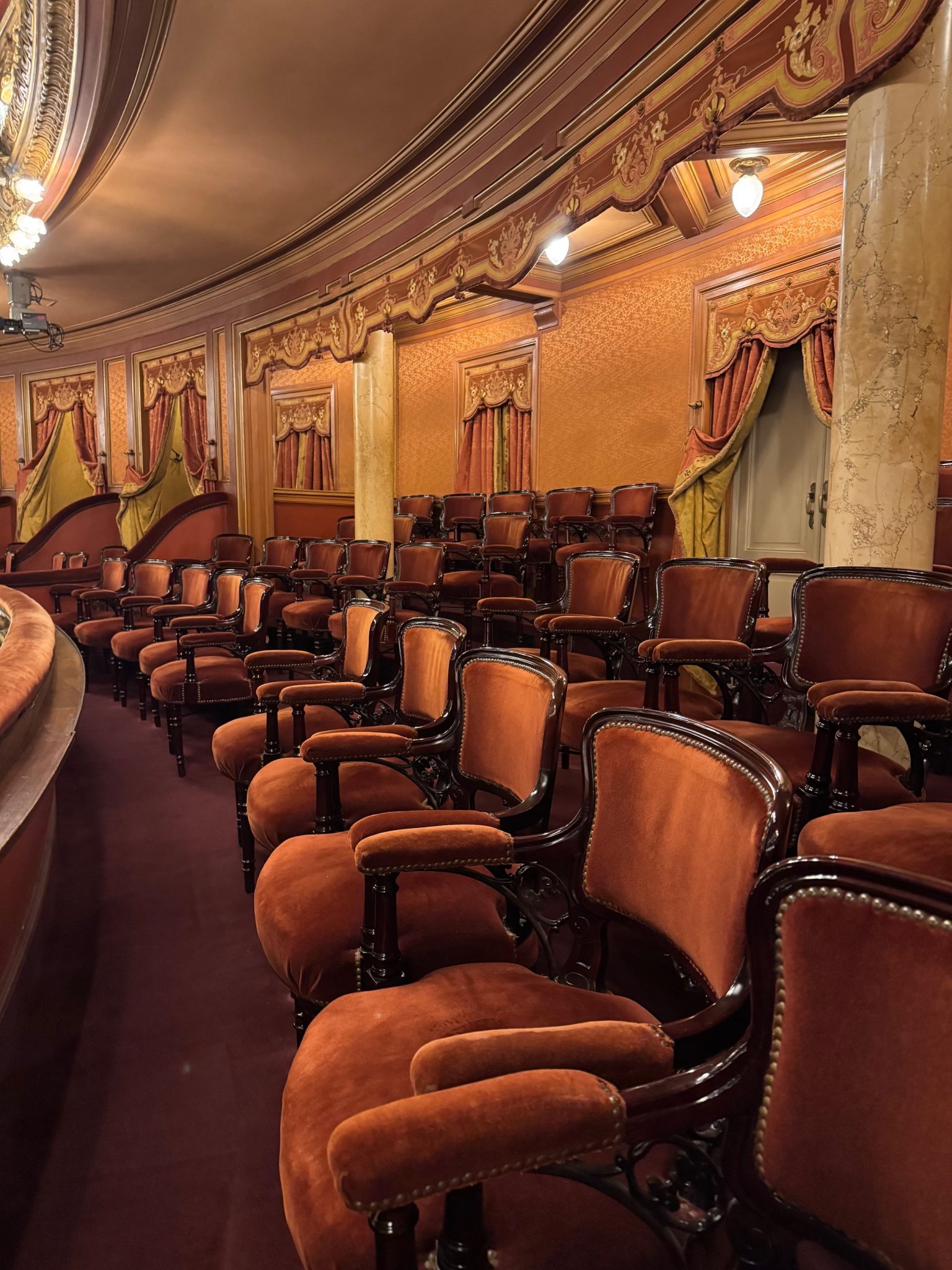
The interior is Neo-Renaissance and French Baroque, very sumptuous and impressive, with marble from practically every country in Europe and lashings of gold leaf. The statues are wonderful – the marble is indented under the child’s hand so we believe the marble is real flesh, and the lines on the child’s foot and knee are equally lifelike.
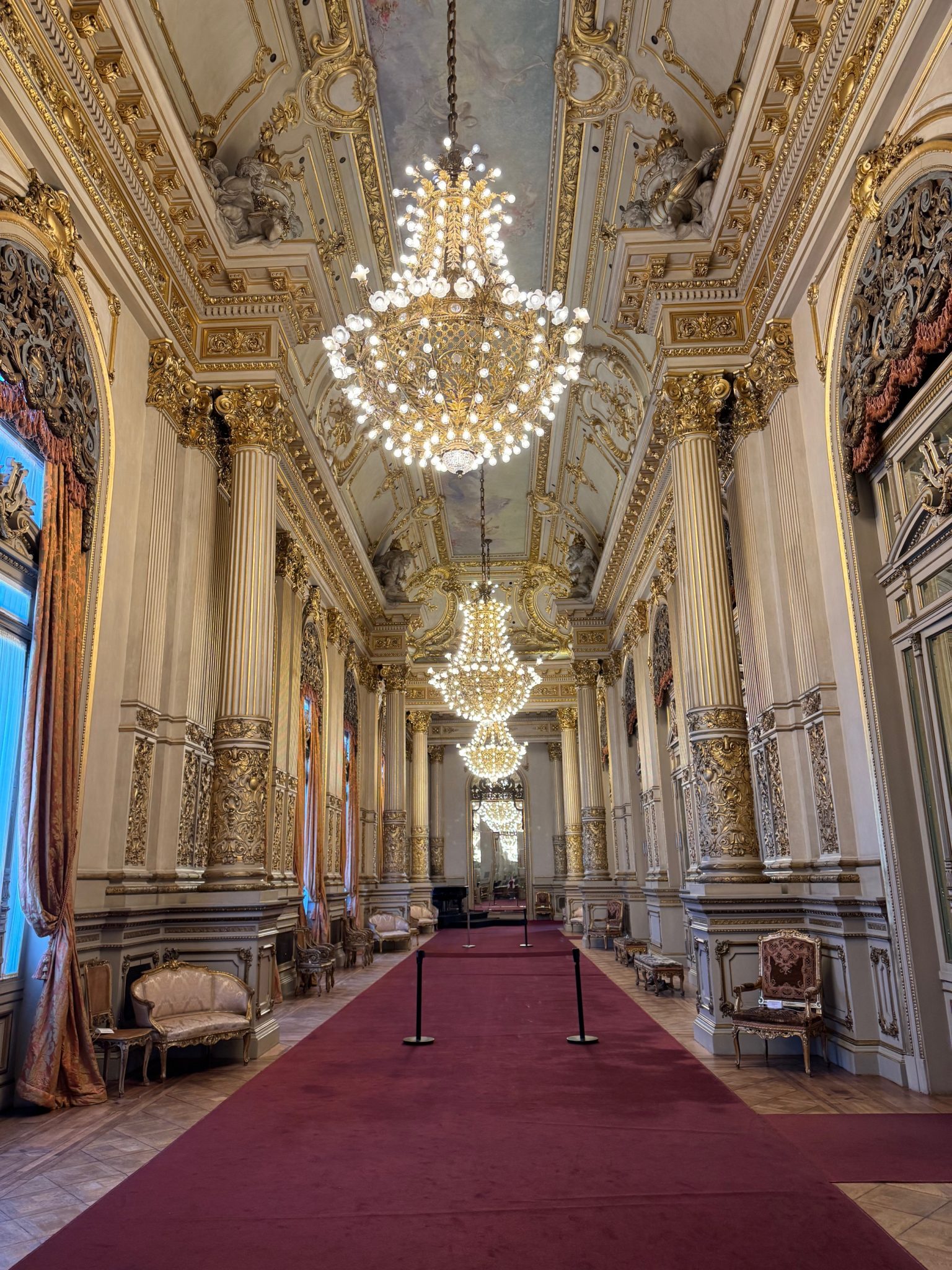
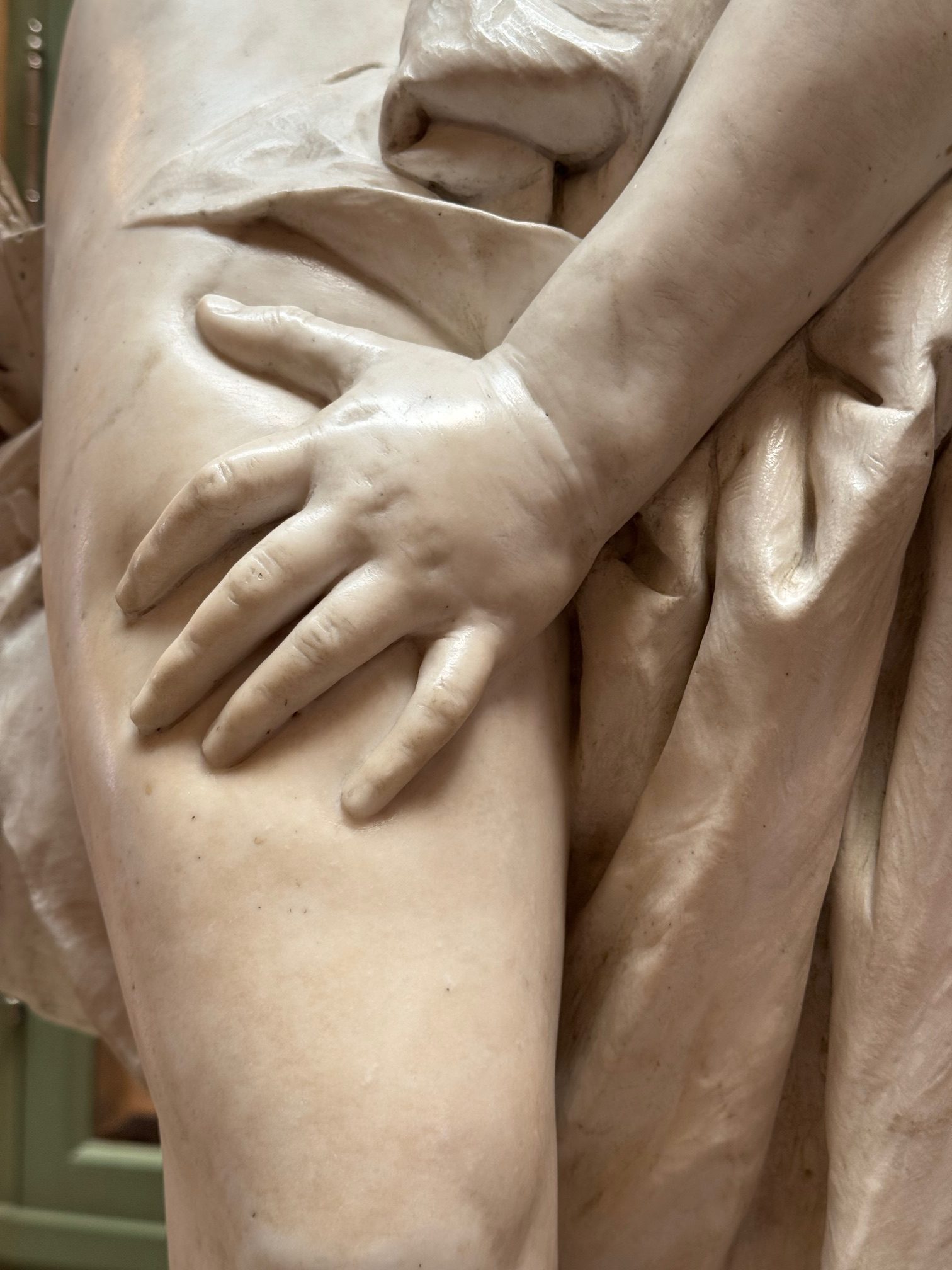
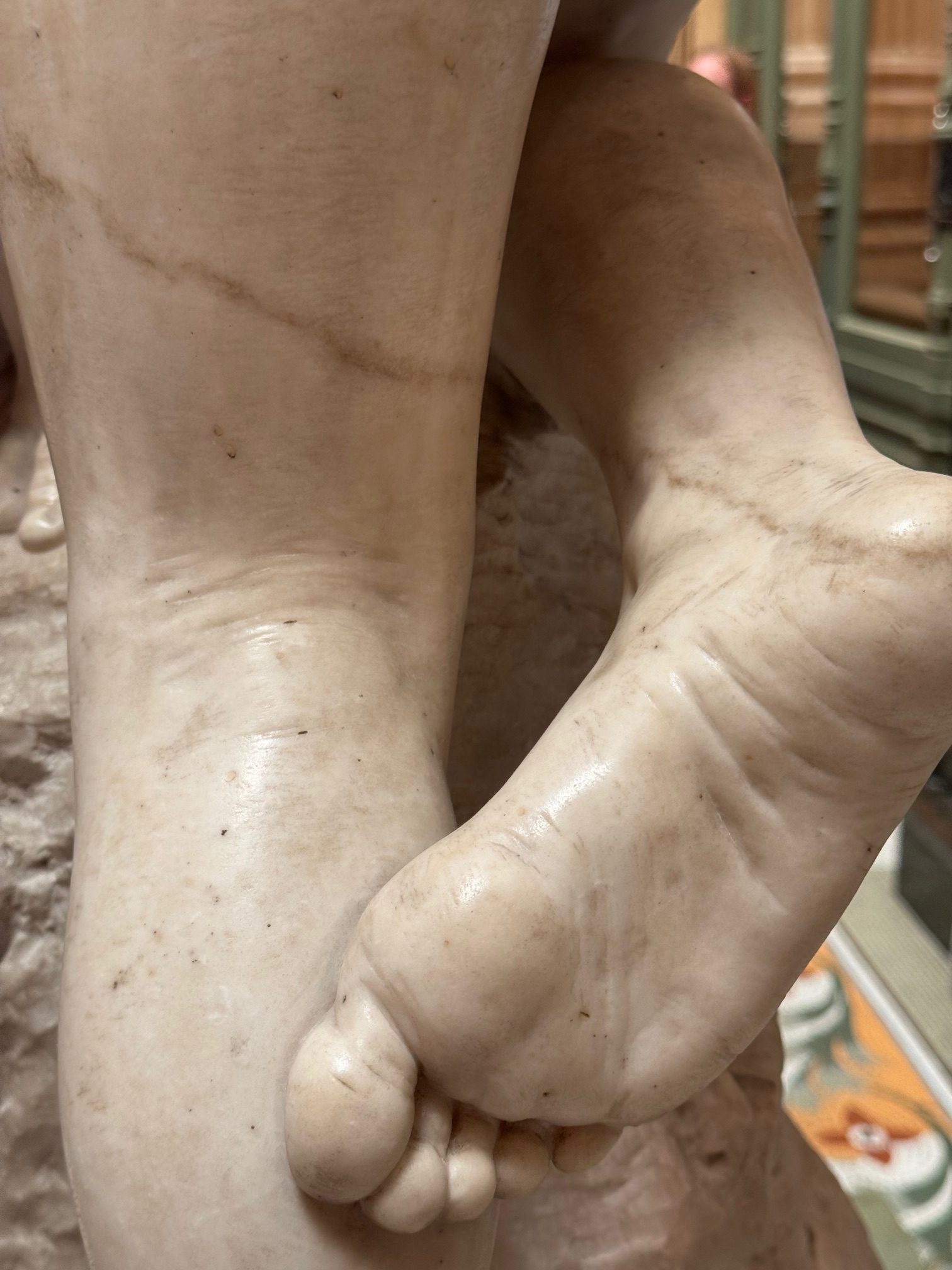
I sat in the box next to the President’s box and admired the general splendour. Our guide pointed out five black grilles in the wall low down by the side of the stalls, directly under the first tier circle. These were where widows came to watch the opera without being seen. Argentinian mourning rules were very strict and widows were not allowed to be seen in public for two years. But they were allowed to scuttle down private corridors and into these shuttered boxes to watch the opera.
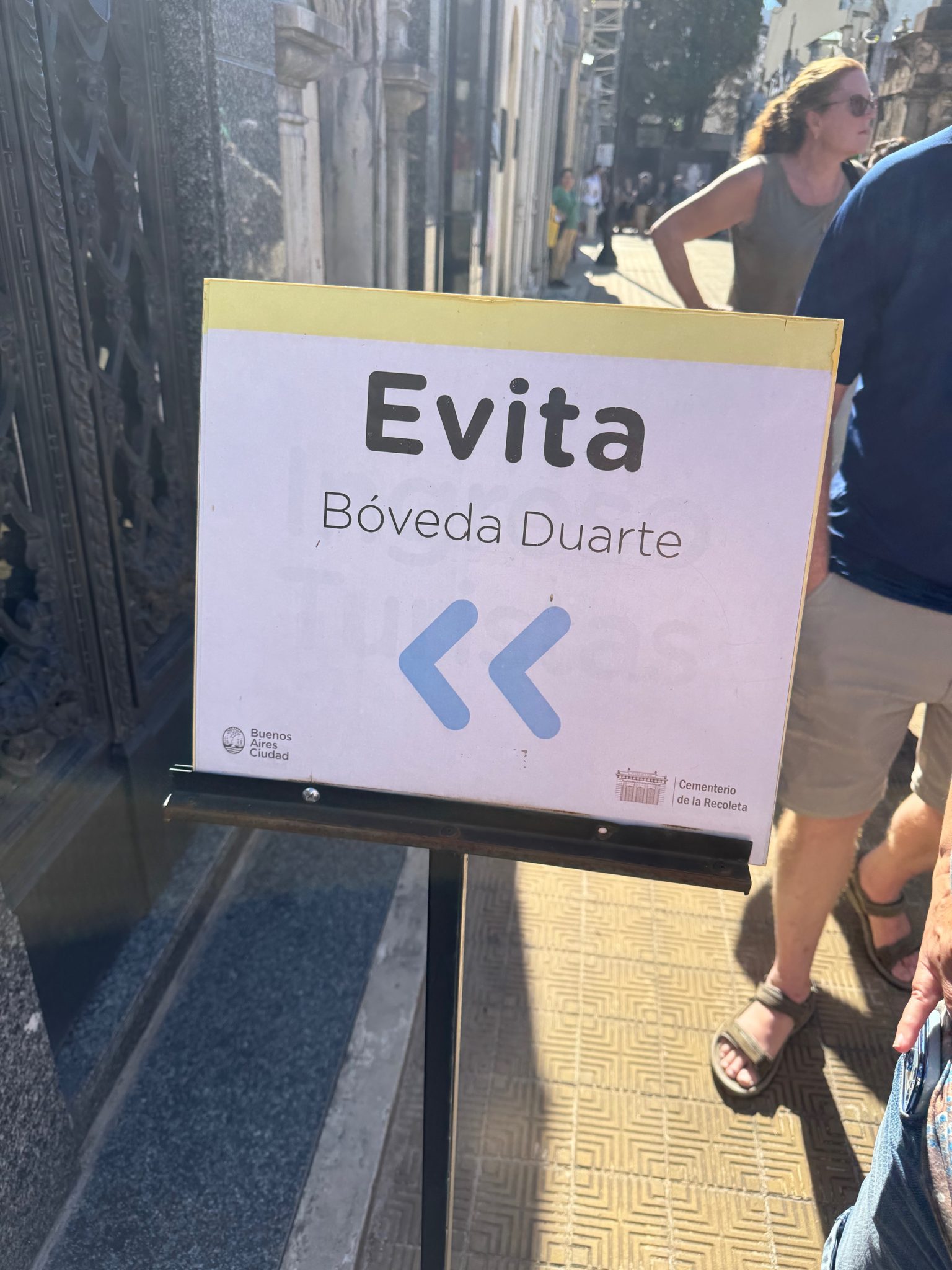
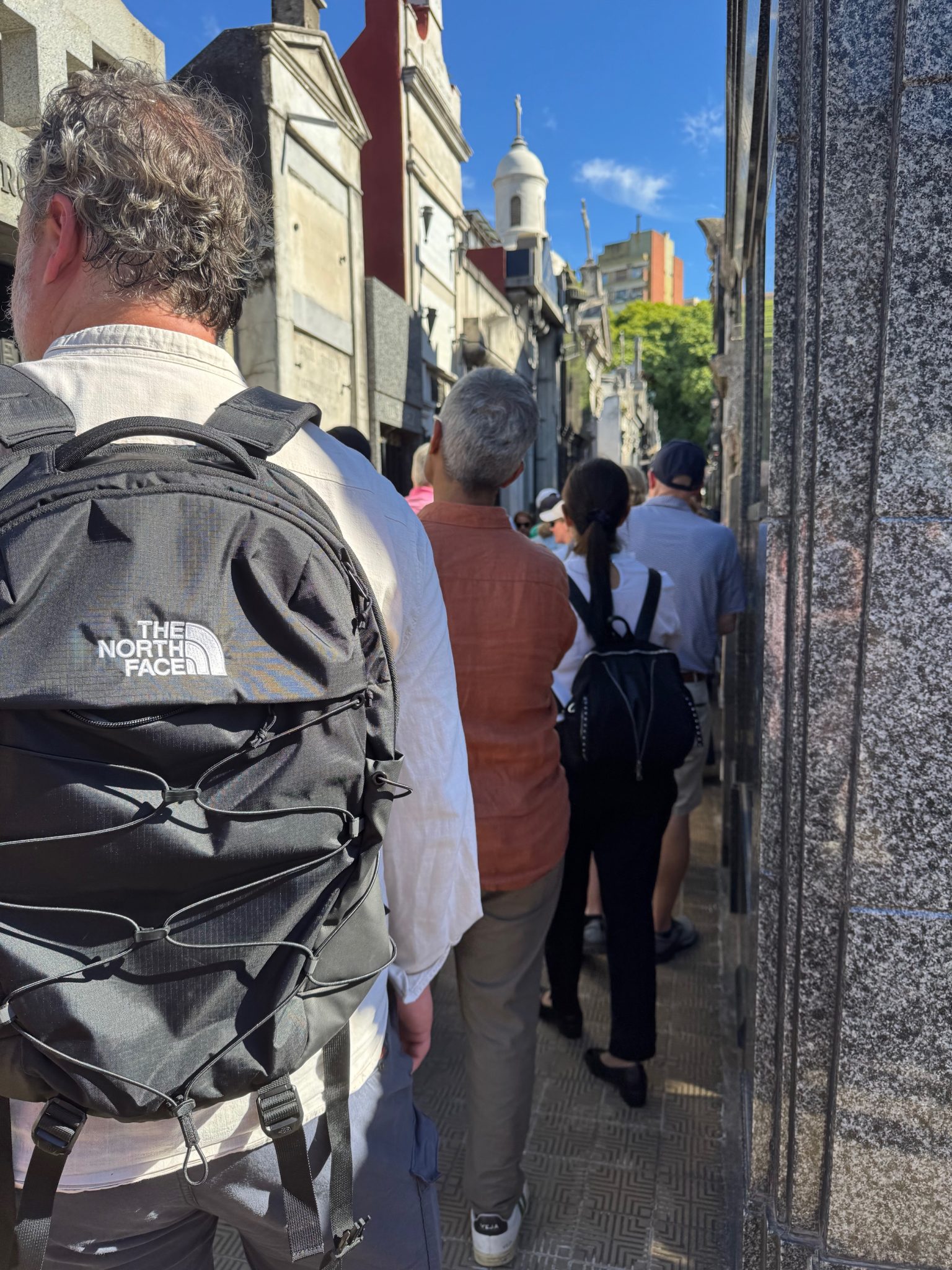
Eva Peron is still revered in Argentina, over seventy years after her death. I visited her tomb in the cemetery and there was a huge queue, shuffling forwards to pay their respects. It felt like the British people’s relationship with Princess Diana; she died far too young and her attitude and achievements resonated with the public. Even today the main opposition party in Argentina is referred to as Peronism.
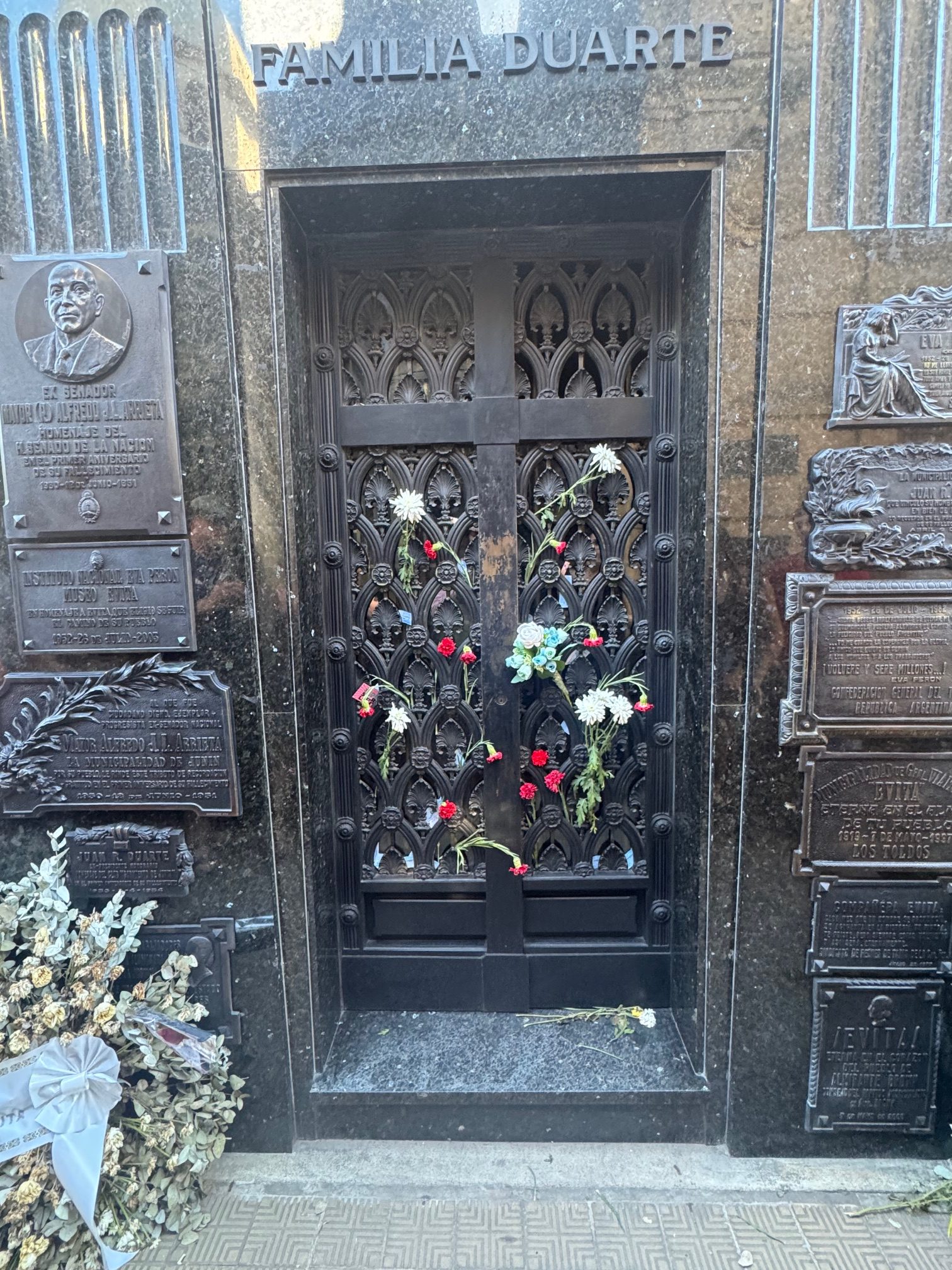
I also went to the Evita museum, which is in a house she bought and turned into a refuge for the homeless. The museum traces her life from her childhood in rural poverty to her life as an actress in Buenos Aires, and then her marriage to Juan Peron who was elected president the following year. She became an activist, loved by the poor and hated by the rich, focusing on the wellbeing of the poor – especially children – and women’s suffrage. When she was eventually buried, wealthy people with family tombs nearby moved their loved ones elsewhere in protest.
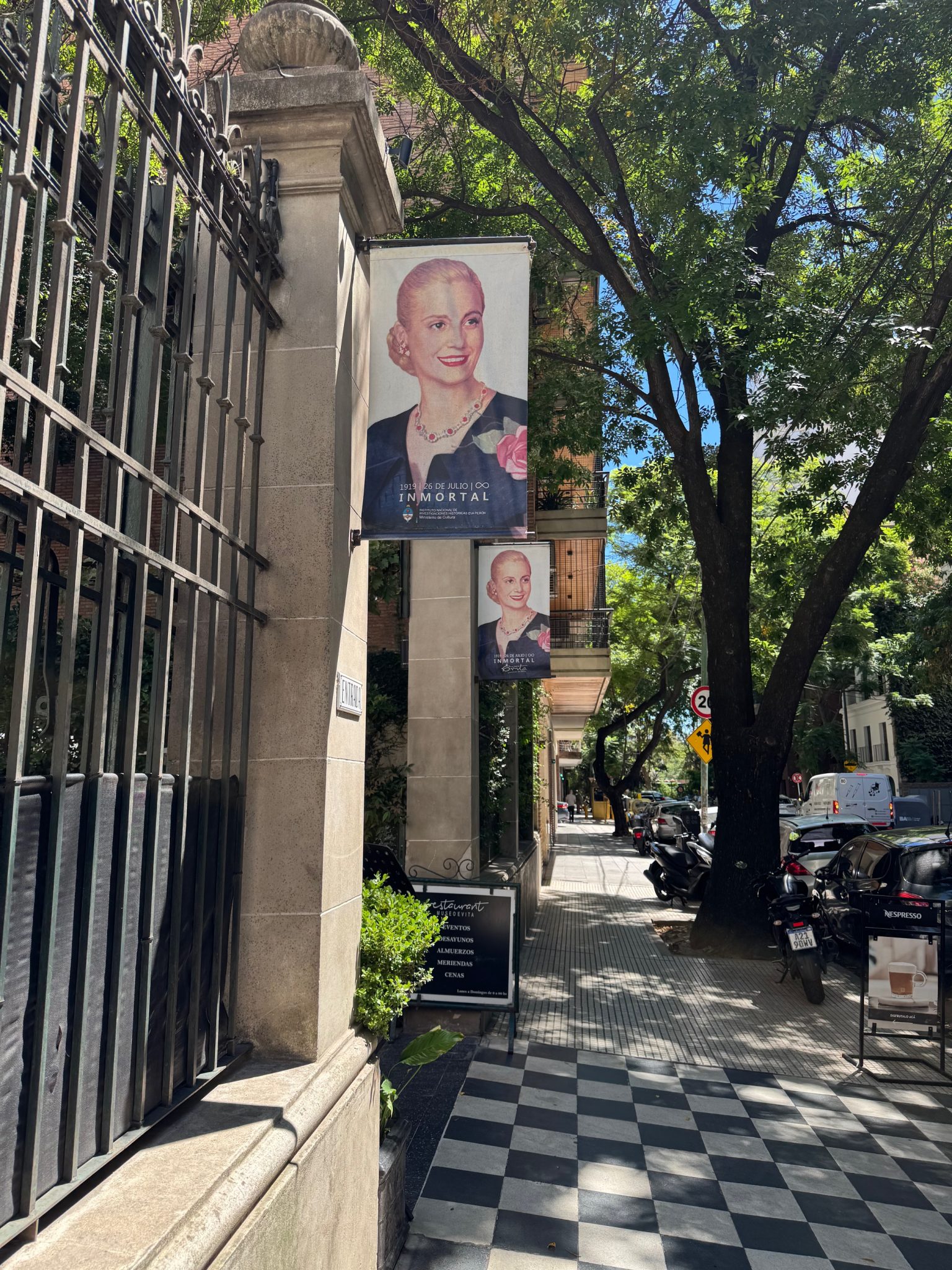
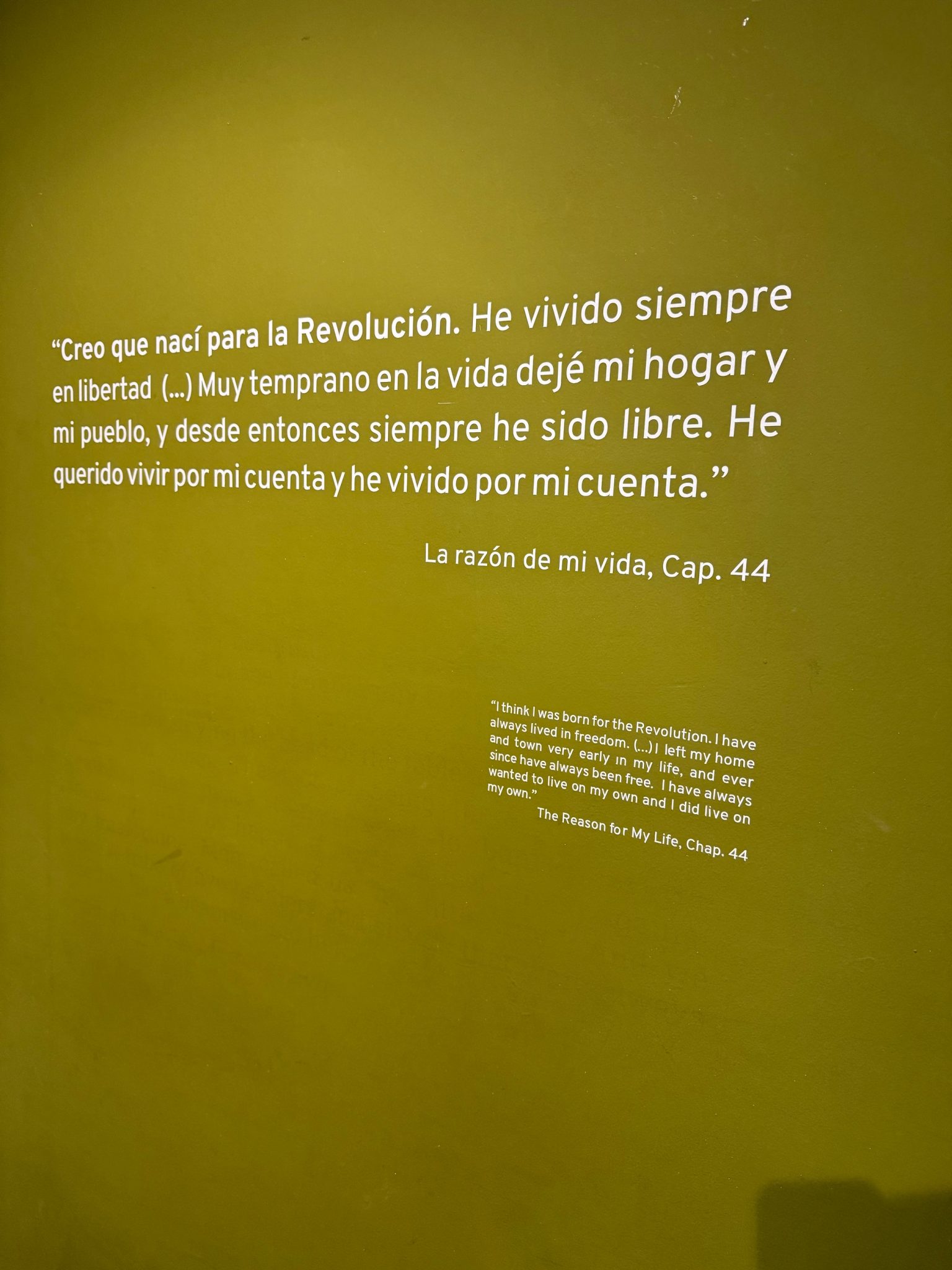
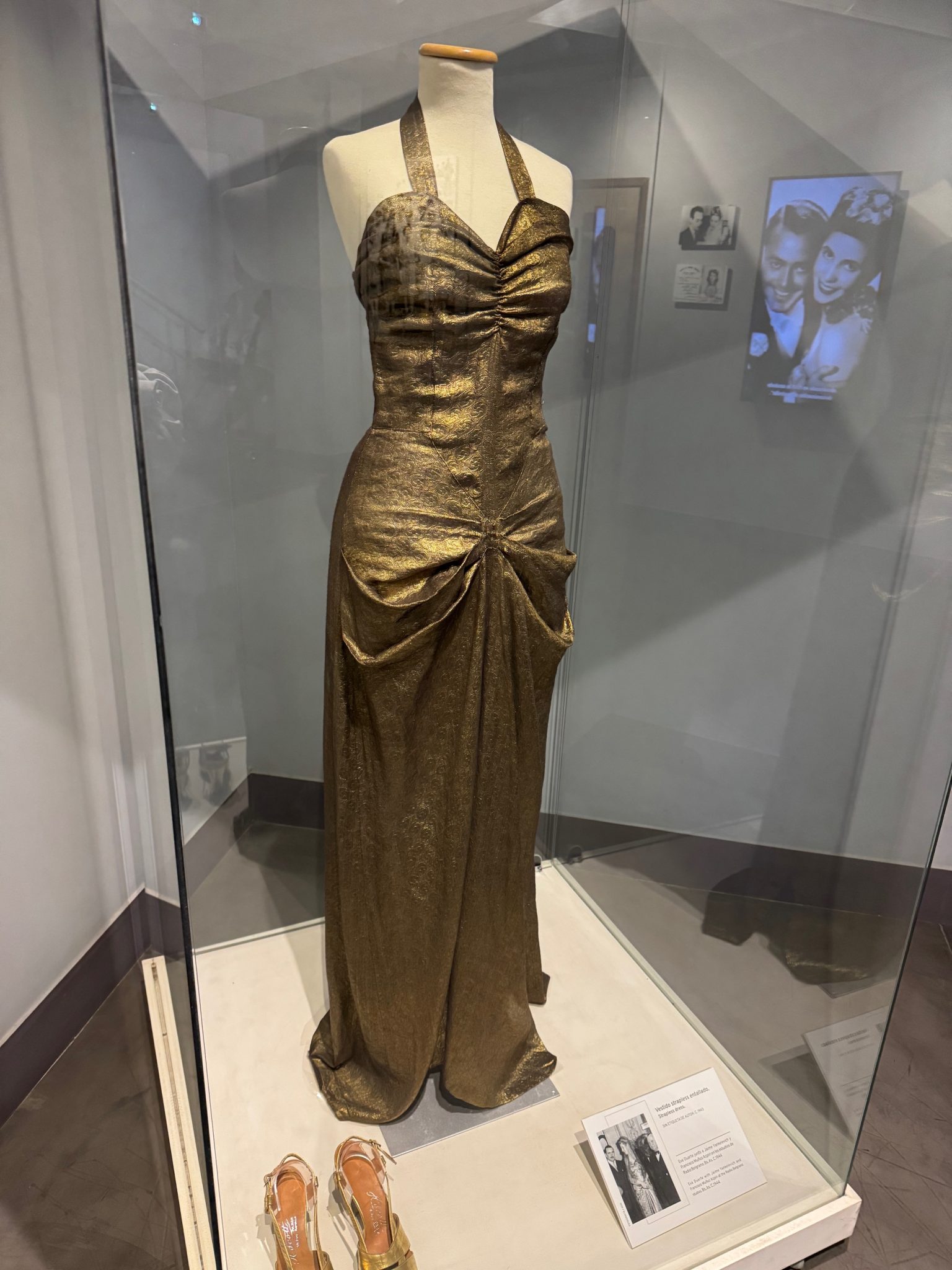
At the museum I also learnt the extraordinary story of her burial – which eventually took place sixteen years after her death.
When she died in 1952 there were three days of public mourning and then her body was embalmed – a process taking a year – while they built a suitable resting place for her. But before that could happen there was a coup, the military took over and Peron fled. The new dictator was worried that Eva’s body could become a rallying point for Peron’s supporters, so he kidnapped it. But as they were all strict Catholics they didn’t dare to burn her body or just hide it, they felt obliged to give her a Christian burial. Whilst deciding where to do this, one of the military leaders hid the body in his attic without telling his pregnant wife what it was. She climbed up in the middle of the night to see what he’d hidden, and he thought she was a Peronist intruder and shot her. This colonel then kept Eva’s body in his office and showed it to visitors as a trophy. ‘She’s mine,’ he would say proudly. ‘That woman is mine.’
Unsurprisingly the other military leaders took a dim view of this, and her body was sent to Italy – allegedly with the help of the Vatican – and buried in a cemetery in Milan under an assumed name, where it remained for thirteen years. Then in 1970 Peronist guerillas killed the dictator and demanded that Eva’s body be returned to her husband in exile in Madrid, where it remained until 1974, when it was finally brought back to Argentina. What a great story … definitely crying out for a Lloyd Webber sequel.